
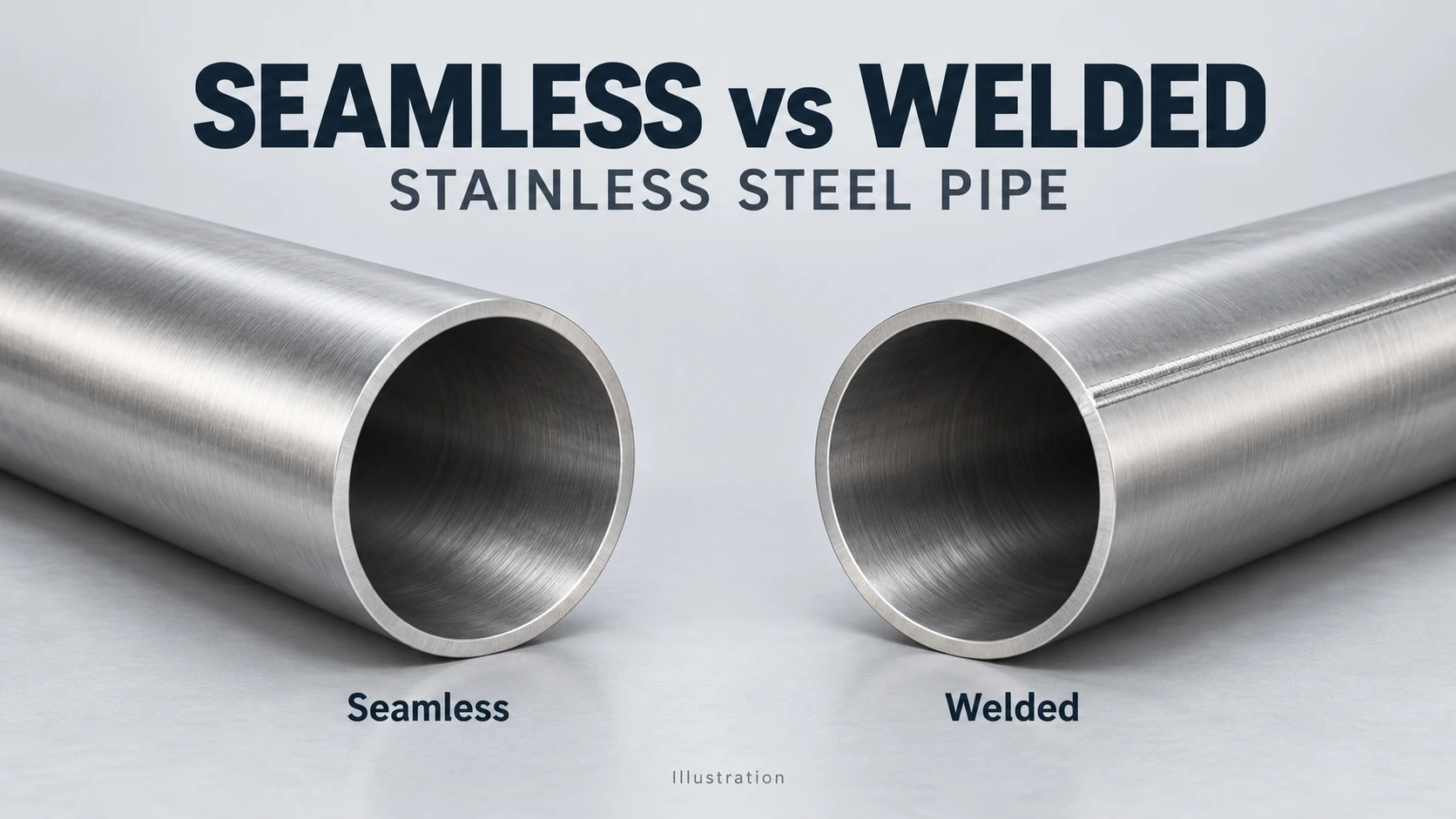
In a seamless vs welded stainless steel pipe comparison, start with the project specification. Seamless pipe has no longitudinal manufacturing weld. Welded pipe is formed and joined along a seam. Either route may be appropriate when the material, dimensions, manufacturing requirements and inspection package match the intended service.
Quick answer: Choose seamless when the approved specification requires it. Consider welded when the specification permits it and a compliant quotation meets your technical and delivery needs. Pressure capability and corrosion performance require more information than the manufacturing route alone.
For a purchasing team, the decision also affects quotation comparisons, fabrication planning and inspection documents. A useful inquiry connects the pipe description to its actual duty: what it will carry, how it will be joined, which specification governs the project and what evidence must accompany delivery. This guide follows that process from manufacturing through to receiving inspection.
How Are Seamless and Welded Stainless Steel Pipes Made?
Seamless Pipe Manufacturing
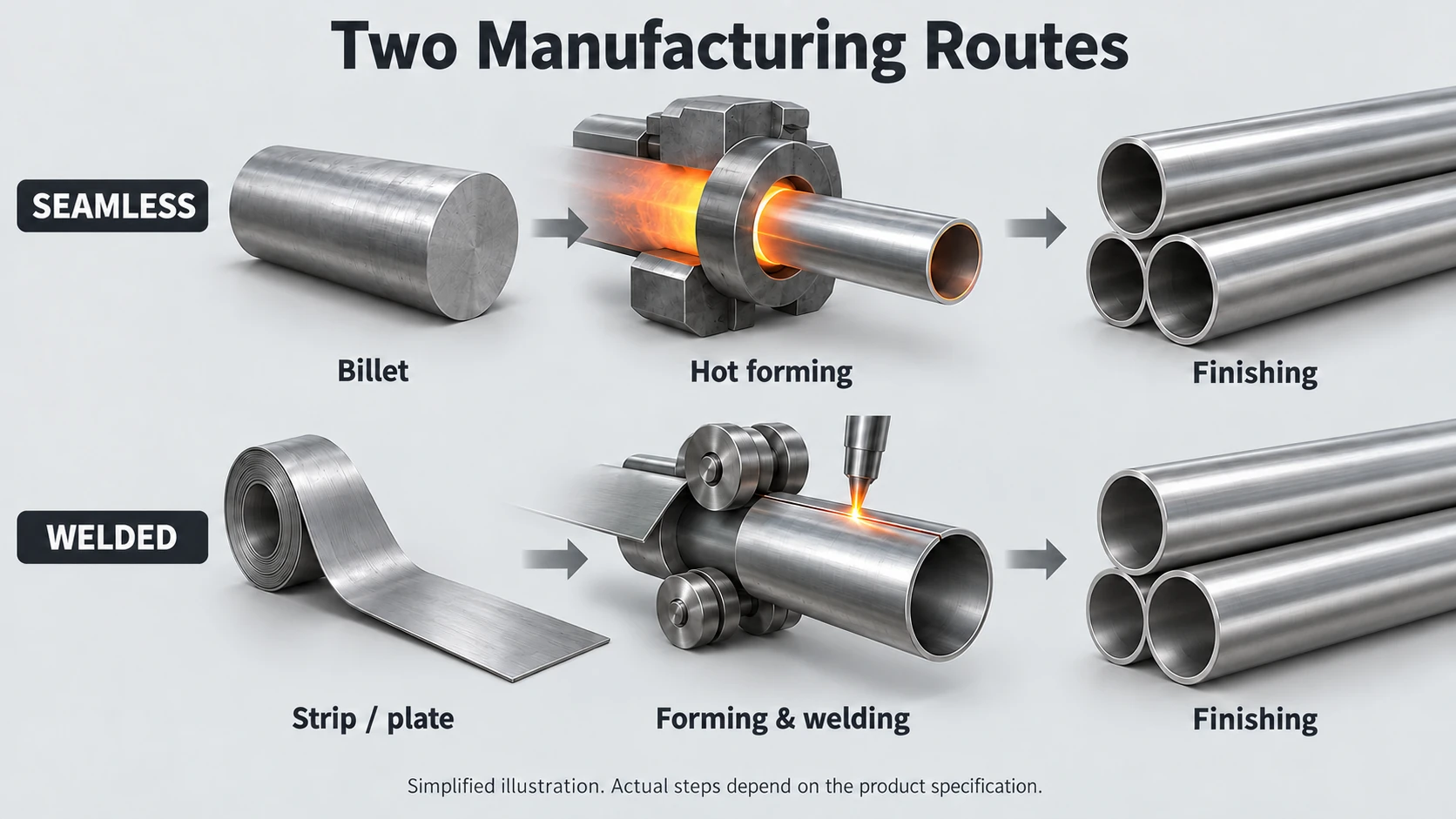
Seamless stainless steel pipe is produced from a billet through hot forming and, where required, further drawing or other finishing operations. It has no longitudinal manufacturing weld.
The complete production route may involve several stages. For example, Tubacex describes seamless production using extrusion and cold rolling. The finishing condition therefore belongs in the technical discussion alongside the word “seamless.”
When reviewing an offer, ask the supplier to identify the supplied condition and confirm the required dimensions, heat treatment and inspection records. This makes it easier to compare a stock offer with a pipe that must be produced or finished specifically for the order.
Welded Pipe Manufacturing
Welded stainless steel pipe starts with strip or plate that is formed into a cylindrical shape and welded. Subsequent treatment and finishing depend on the product standard and order requirements. Plate fabrication also provides a production route for large diameters. Atlas Steels describes these manufacturing routes.
For welded products, include the required weld condition in the inquiry. Where the application calls for internal finishing, particular examination or a defined surface condition, describe those requirements explicitly. A quotation should make clear which operations are included and which are additional options.
For buyers, the practical distinction is the manufacturing route being offered. A polished surface alone does not establish whether a pipe is seamless or welded; check the order description and supporting records.
Seamless vs Welded Stainless Steel Pipe: Comparison
| Comparison | Practical difference | What to confirm before ordering |
|---|---|---|
| Starting material | Seamless uses a billet-based route; welded uses formed strip or plate | Name the permitted manufacturing route |
| Manufacturing weld | Seamless has no longitudinal manufacturing weld; welded has a seam | Agree weld-related requirements where applicable |
| Large diameters | Welded pipe can be fabricated from plate; seamless availability depends on the mill’s range | Obtain confirmation for the exact size and wall |
| Pressure service | The project may permit both routes or restrict the choice | Check the approved piping specification |
| Price and delivery | Production, stock and order requirements affect the offers | Request matching specifications and itemized costs |
ASTM A312/A312M covers multiple manufacturing routes for austenitic stainless steel pipe. Its scope alone does not approve a particular pipe for every piping system. See ASTM’s published scope.
Which Pipe Is Better for Pressure Service?
Start with the design pressure, design temperature, fluid and approved piping specification. Then check whether the proposed pipe meets the required material and dimensional criteria and any restrictions on manufacturing route.
ASME B31.3 addresses process piping materials, design, fabrication, examination and testing. This is a different function from a pipe product specification. A compliant product still needs to fit the system’s design requirements. ASME explains the scope of B31.3.
For procurement, this means avoiding a universal pressure cutoff for choosing seamless over welded. If a project specifies seamless only, obtain engineering approval before accepting a welded alternative. If both routes are permitted, compare them against the same approved requirements.
Include the operating conditions in the technical inquiry, particularly when the service involves repeated pressure changes, temperature cycling or a demanding fluid. The responsible designer can then identify the requirements that matter for that system. Purchasing can use the resulting specification as a consistent basis for supplier evaluation.
For example, if a line specification names seamless TP316L pipe, a welded TP316L offer represents a proposed change. Record the deviation and its disposition before placing the order, even when the supplier offers the same nominal size and grade.
Does Seamless Pipe Have Better Corrosion Resistance?
A manufacturing-route label is insufficient to assess corrosion performance. Buyers also need the specified grade, service environment and surface condition.
Welded stainless steel deserves attention to the weld area and post-weld surface treatment. Visible heat tint can reduce the surface’s available corrosion resistance, as explained in Euro Inox’s guide to pickling and passivating stainless steel. Agree the required surface condition and treatment before ordering.
Also distinguish the pipe’s manufacturing weld from installation welds: seamless pipe may still be joined by welding during fabrication.
Keep the grade decision separate from the route decision. Gengfei’s guides to 304 vs 304L stainless steel Và 316 vs 316L stainless steel provide related reading when preparing the material specification.
The “L” designation also deserves attention when specifying the grade. Outokumpu describes 316L as a low-carbon, molybdenum-alloyed stainless steel and identifies improved resistance to intergranular corrosion after welding as a benefit of its low carbon content. That is a material characteristic to consider separately from the choice of seamless or welded manufacture. See Outokumpu’s 316L grade description.
Give the supplier and technical reviewer enough information to assess the environment. Useful details include the process medium, concentration, temperature, cleaning conditions and external exposure. If the project has already selected a grade, attach the approved material requirement so the quotation follows that decision.
For exposed or visually important installations, agree the required finish and its inspection criteria as well. Include any treatment required after shop fabrication or site welding in the installation scope, so the delivered pipe and the completed system have compatible surface requirements.
How to Choose for Common Project Scenarios
The following scenarios illustrate how to organize a purchase decision. The applicable project documents determine the final requirements.
Replacing Pipe in an Existing Process Line
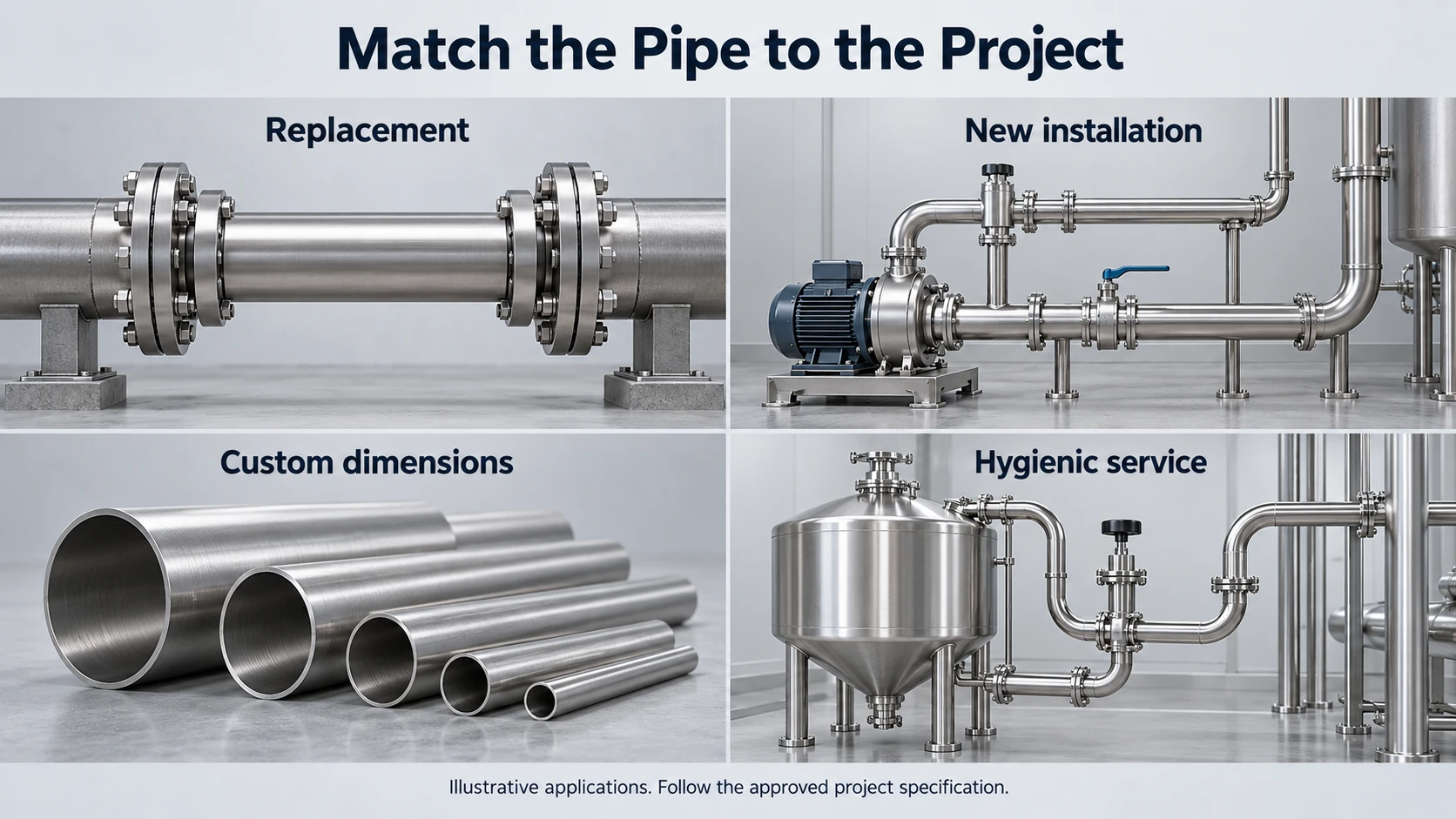
Begin with the existing line class, drawings and material records. Match the required grade, size, wall, end preparation and manufacturing route. Check the connection details and replacement length against the installed arrangement.
If the original material is difficult to source, ask suppliers to list alternatives as separate offers. Keep each proposed change visible so the technical team can review its effect on the existing system before procurement proceeds.
Comparing Offers for a New Industrial Line
When the approved specification permits both routes, issue one inquiry with a common technical basis. Request separate seamless and welded prices, together with delivery schedules and a clear list of deviations.
Use a comparison sheet covering dimensions, supplied condition, tests, documents and delivery terms. This gives the team a practical way to identify the offer that meets the requirement and fits the project schedule.
Sourcing Large-Diameter or Custom-Length Pipe
For a custom order, confirm the actual size and length combinations a supplier can offer. Ask about manufacturing availability, quantity requirements, cutting arrangements and the point at which dimensions will be inspected.
Where welded plate fabrication is proposed, agree the applicable standard and examination requirements before accepting the production plan. For either route, check handling, end protection and transport arrangements for the ordered lengths.
Buying for a Hygienic or High-Purity System
Identify the required product type and hygienic specification at the start. The inquiry may need to define the internal surface, finish acceptance, joining requirements and documentation in addition to the grade and manufacturing route.
Where a project invokes ASME BPE, its requirements extend to matters such as surface condition, cleanability and fabrication. ASME’s BPE overview describes this broader scope. Confirm whether the purchase calls for sanitary tubing or another specified product before requesting prices.
Match the Standard to the Product
The description “stainless steel pipe” is incomplete without a governing standard. Common examples include:
- ASTM A312/A312M: austenitic stainless steel pipe, with seamless, welded and heavily cold-worked welded routes within its scope.
- ASTM A358/A358M: electric-fusion-welded austenitic stainless steel pipe.
- ASTM A790/A790M: seamless and welded ferritic/austenitic stainless steel pipe, relevant to duplex grades.
Tubing standards serve different product requirements. ASTM A269 addresses general-service austenitic stainless tubing, while ASTM A270 addresses sanitary tubing. Atlas Steels’ product-specification reference distinguishes these standards.
State the required standard and edition in the inquiry. Avoid treating a tube, decorative hollow section and pressure pipe as interchangeable because they share a grade name.
It is useful to separate three items on the purchase specification: the product standard, the dimensional standard and the piping design requirements. Each answers a different question about what is supplied and how it will be used. Ask the supplier to acknowledge the specified documents and list any exceptions in the quotation.
Compare Dimensions and Inspection Requirements
Confirm the Complete Dimensional Description
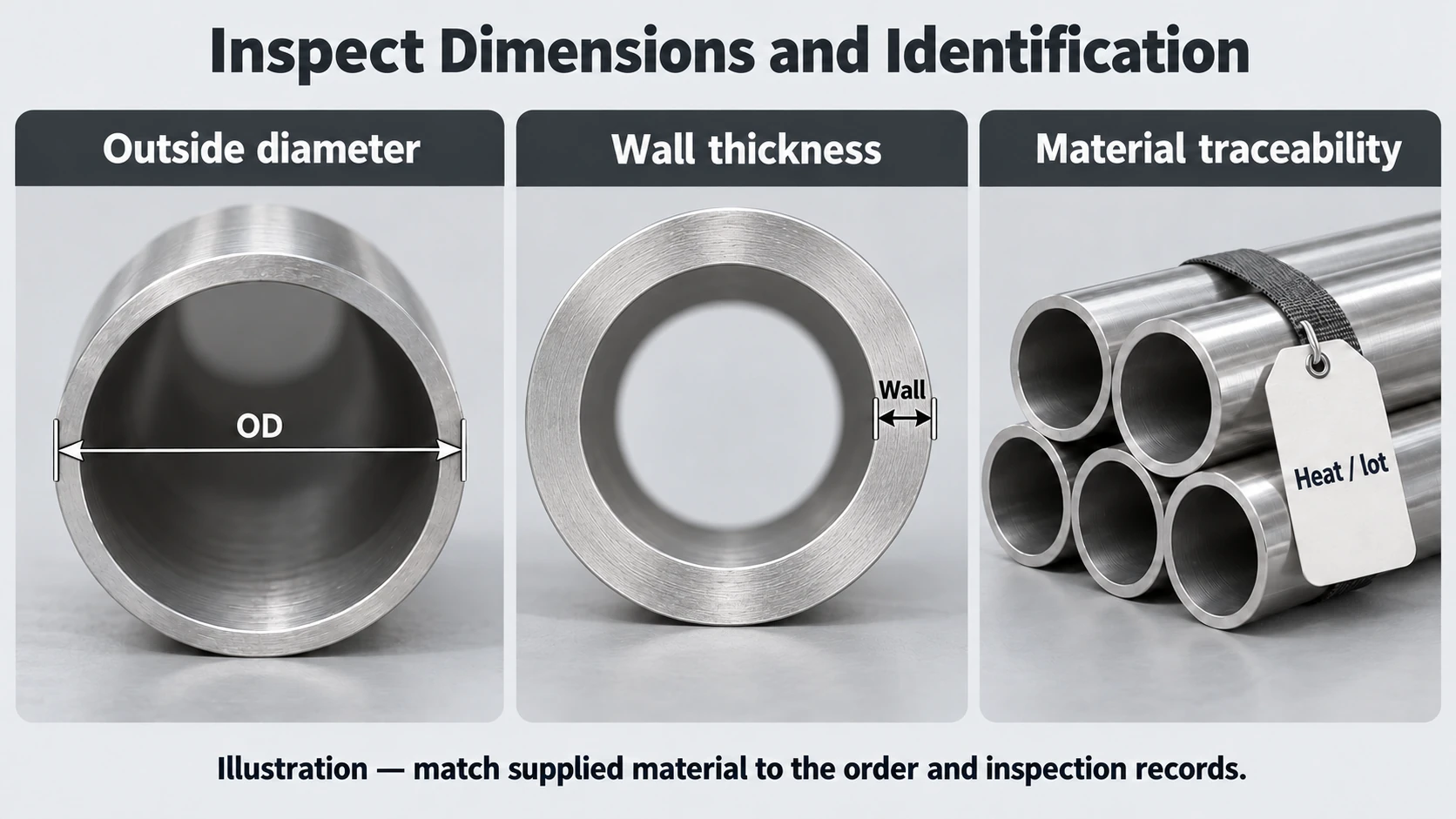
Specify pipe size and wall thickness clearly. For standard pipe dimensions, buyers commonly use NPS or DN together with a schedule designation. Confirm the corresponding outside diameter and wall rather than relying on a nominal size alone. For background, see Gengfei’s stainless steel pipe schedules guide.
ASME B36.19 standardizes dimensions for both welded and seamless wrought stainless steel pipe. This provides a dimensional reference; the purchase still needs to identify the applicable product and project requirements. See ASME’s B36.19 description.
For a custom drawing, identify which dimensions control fit and assembly. State the units and any specific requirements for length, straightness, ovality or end preparation. If a quotation uses a different dimensional description, request clarification before comparing it with other offers.
Define the Inspection Package Before Production
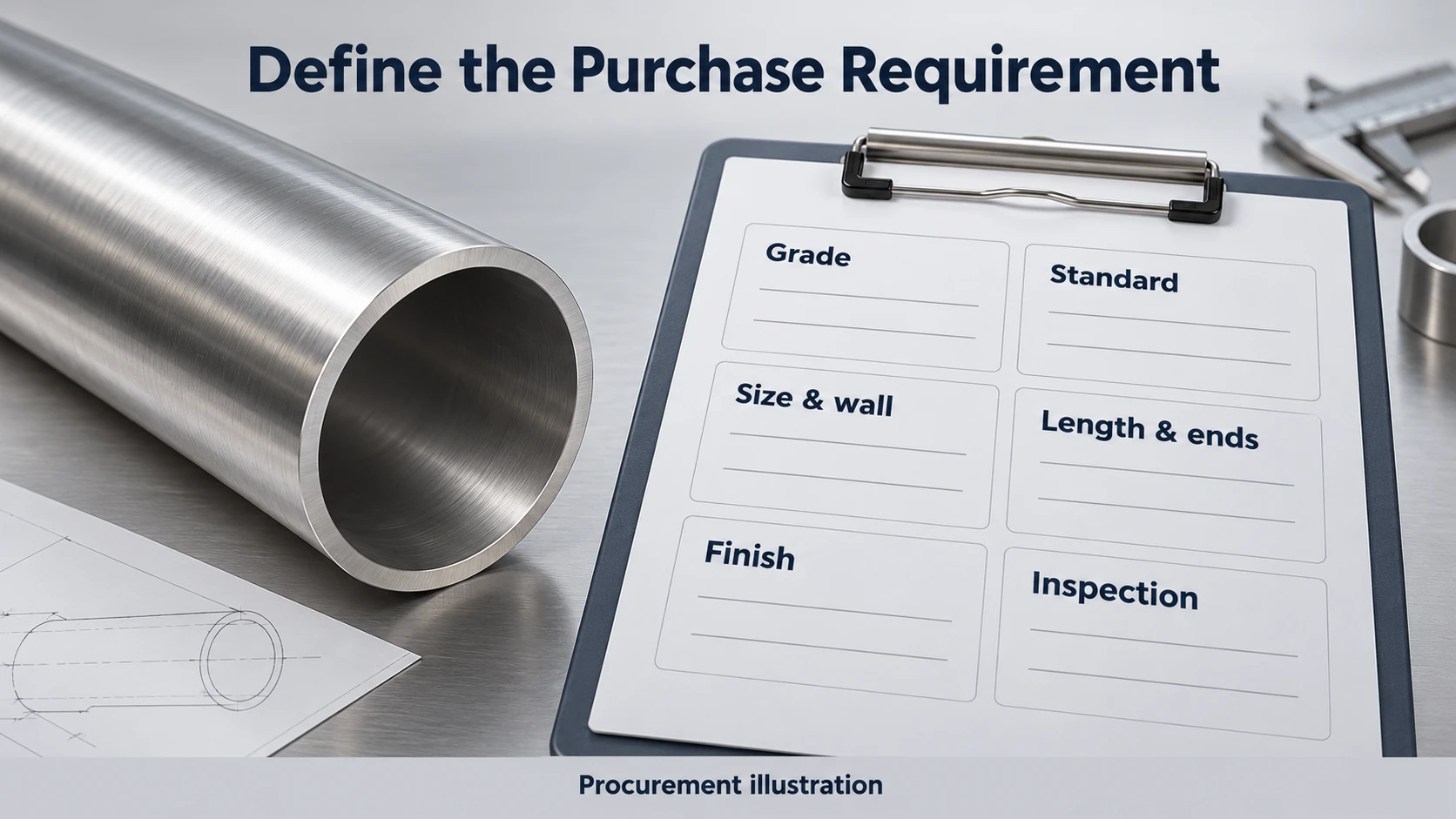
Before accepting a quotation, agree:
- Size, wall thickness, tolerances, length and end preparation.
- Heat treatment and required surface condition.
- Material identification and traceability to the supplied pipe.
- Inspection methods, acceptance criteria and required reports.
- Any supplementary tests or third-party inspection arrangements.
ASTM’s A312 overview identifies a hydrostatic test or nondestructive electric test for each pipe and provides for supplementary requirements. Extra examination should be stated in the order rather than assumed from the word “seamless” or “welded.” See the ASTM A312 overview.
For any additional examination, specify the method, coverage, acceptance criteria and reporting requirement. If a third party must attend, agree the inspection stage and notification arrangements early enough to include them in production planning.
Also distinguish between the supplier’s routine inspection and the additional documents requested for the project. Ask the supplier to identify the reports included in its offer and the cost or scheduling effect of extra requirements. Resolve those points before manufacturing starts.
Check the Material Test Report and Traceability
Prepare a document checklist alongside the physical inspection plan. Depending on the order, it can include the stated grade and standard, heat identification, chemical and mechanical results, supplied condition and required test records.
At receiving inspection, compare the delivery labels or markings with the packing list and material report. Where several heats are supplied, ask for a clear allocation of the documents to the corresponding material. This helps maintain traceability through storage, cutting and fabrication.
If the project calls for an EN 10204 document type, state that type in the order and confirm the supplier’s proposed arrangement. Manufacturers may offer different inspection and certification packages; for example, Alleima distinguishes 3.1 certification and requested 3.2 reception testing for its high-pressure tubing. Confirm the package for the actual product being purchased.
Packaging, Handling and Receiving Inspection
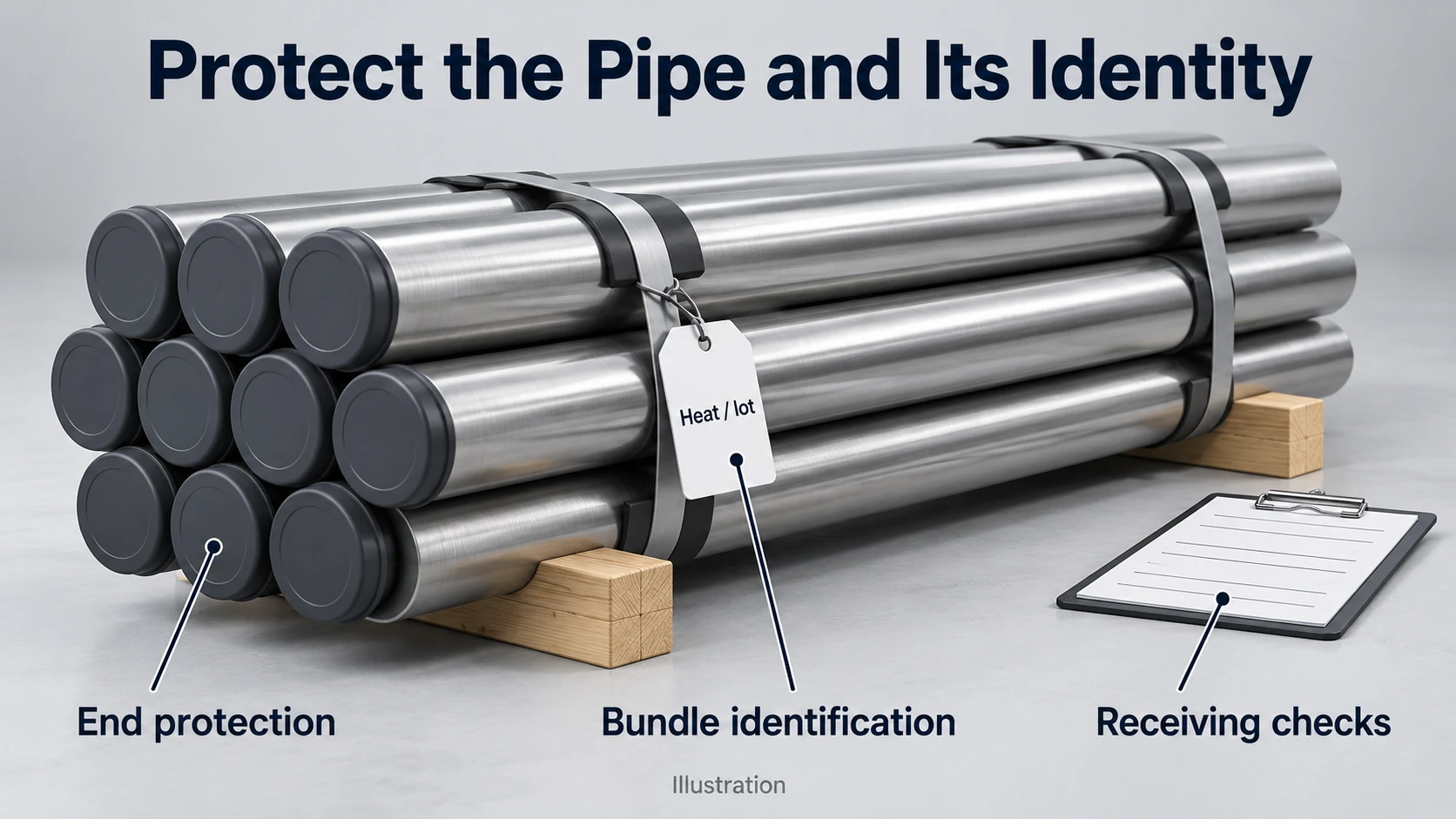
Include packaging in the inquiry, especially for finished surfaces or orders containing several sizes and heats. Ask for suitable end protection, bundle identification and a packing list that allows the receiving team to identify the material without dismantling every bundle.
Agree how the required surface condition will be protected during handling and transport. At arrival, record the quantity, labels, visible condition and any transport damage before the material is released for fabrication. Follow the purchase order’s inspection and acceptance procedure for dimensional checks and document review.
Keep the associated records accessible after delivery. A complete receiving record helps the fabrication team identify which material belongs to each purchase item and which inspection documents apply.
How to Compare Cost and Delivery
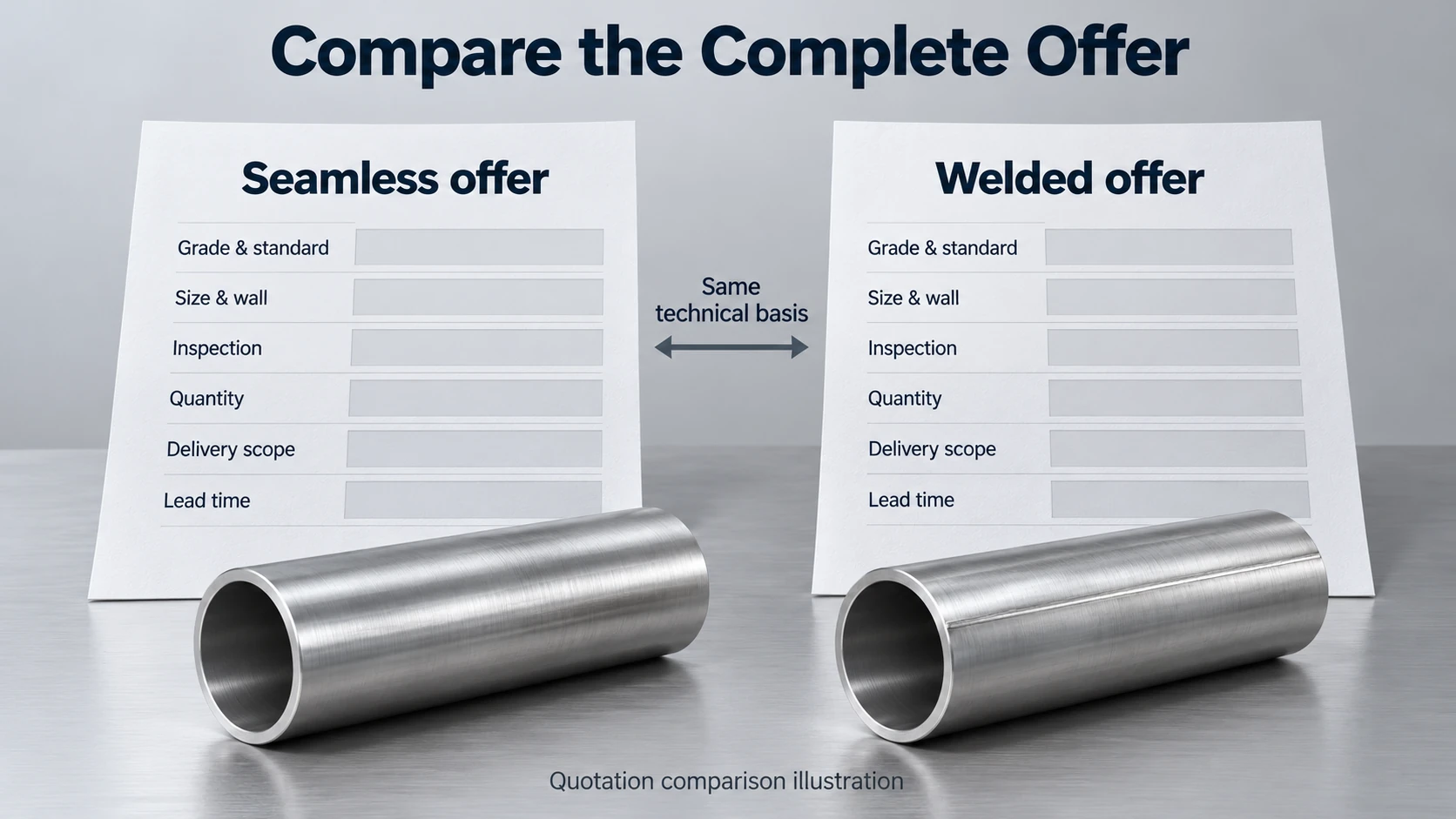
When both routes are allowed, request comparable quotations. Match the grade, standard, dimensions, quantity, finish, inspection package and delivery destination before comparing prices.
Ask suppliers to separate material price, cutting, extra testing, packaging and freight. Confirm whether the offer is from stock or new production, and whether the quoted lengths suit your cutting plan.
A useful comparison records both cost and compliance. For example, a lower offer for a different wall thickness or a reduced inspection package does not answer the original inquiry. Record deviations explicitly so the buyer and engineer can assess them before the purchase order is issued.
Several purchasing details deserve separate attention:
- Grade and supplied condition: Compare the exact material description and required treatment in each offer.
- Size and quantity: Ask the supplier to confirm availability for the full combination of diameter, wall, length and order quantity.
- Cutting and fabrication: Include end preparation, usable lengths, cutting allowances and any agreed processing.
- Inspection and documents: Identify extra testing, witness inspection and document charges.
- Delivery scope: Confirm packing, transport, delivery terms and the stage at which the quoted lead time begins.
For delivery planning, request dates for any important document review or inspection stages as well as dispatch. A project may need material reports approved or an inspection completed before the pipe can be released. Include these steps in the comparison so the quoted schedule matches the actual purchasing process.
Common Purchasing Mistakes to Resolve Early
A Grade Name Is Used as the Whole Specification
An inquiry for “316L stainless pipe” leaves the supplier to interpret the manufacturing route, size, wall, finish and inspection scope. Complete those fields before collecting final offers so each supplier quotes against the same requirement.
A Substitution Is Hidden in the Quotation
A supplier may offer a different route, length or inspection arrangement to improve availability. Request an explicit deviation list and record the accepted technical description in the purchase order. This gives both parties a clear reference during inspection and delivery.
The Documentation Is Discussed After Production
List the required material reports, examination records and inspection arrangements in the inquiry. Ask the supplier to acknowledge them before the order is placed, with any additional charges and document delivery dates identified.
An RFQ Example Buyers Can Adapt
The following is an illustrative inquiry format. Replace its dimensions, quantity and conditions with the approved project requirements.
Please quote ASTM A312/A312M TP316L stainless steel pipe, using the edition stated in the project specification. Size: NPS 2, Schedule 40S; length: 6 metres; quantity: 100 pieces. Please identify the manufacturing route. Where the project permits both routes, provide separate seamless and welded offers. Confirm heat treatment, surface condition, end preparation, applicable testing and material test reports with heat-number traceability. List deviations, additional inspection costs, packing, delivery terms and lead time separately.
Attach the relevant specification or drawing. This gives suppliers a common basis for quotation and helps identify substitutions early.
For a formal project inquiry, add the delivery destination, required delivery window, packaging instructions and document schedule. Where the engineering team permits alternatives, explain how those alternatives should be submitted. A separate technical offer for each option makes the evaluation easier to follow and preserves the basis of the final decision.
Câu hỏi thường gặp
Can Welded Stainless Steel Pipe Be Used in Pressure Systems?
It can be considered where the applicable product standard, piping code and approved project specification permit it. Confirm the design and examination requirements for the particular system.
Is Seamless Pipe Always More Accurate?
The word “seamless” does not define a dimensional tolerance. Compare the specified outside diameter, wall, straightness and other acceptance limits in the actual offers.
If assembly depends on a close fit, provide the relevant drawing and acceptance limits with the inquiry. Ask the supplier to confirm those limits for the offered product rather than relying on the route name.
Is Welded Pipe Always Cheaper?
Use current quotations for matching requirements. Size, quantity, stock availability, finishing, testing and freight all belong in the purchase comparison.
Compare the total delivery scope as well as the material price. Cutting, inspection and usable lengths may affect which quotation best fits the project.
Can Seamless and Welded Pipe Be Substituted for Each Other?
A substitution needs to satisfy the approved product, dimensional and piping requirements. If the purchase specification restricts the route, submit the alternative for technical review before accepting it. Record any approved change in the final order documents.
Does Seamless Pipe Eliminate Welding During Installation?
Seamless describes the pipe’s manufacture. The installation may still use welded connections, depending on its design. Include the specified joining and post-fabrication requirements in the overall project scope.
What Should I Check When the Pipe Arrives?
Follow the agreed receiving inspection plan. Typical purchasing checks include quantity, identification, visible condition, ordered dimensions, end preparation and the link between the supplied material and its documents. Record any discrepancy before releasing the material for use.
Discuss Your Pipe Requirement with Gengfei Steel
Explore Gengfei’s stainless steel pipe range, bao gồm 304 ống thép không gỉ Và 316 stainless steel pipe.
For a quotation, send the required grade, standard, size, wall thickness, quantity, application and inspection requirements through the Gengfei Steel contact page. Include the permitted manufacturing route so the offer can be evaluated against your project specification.
