
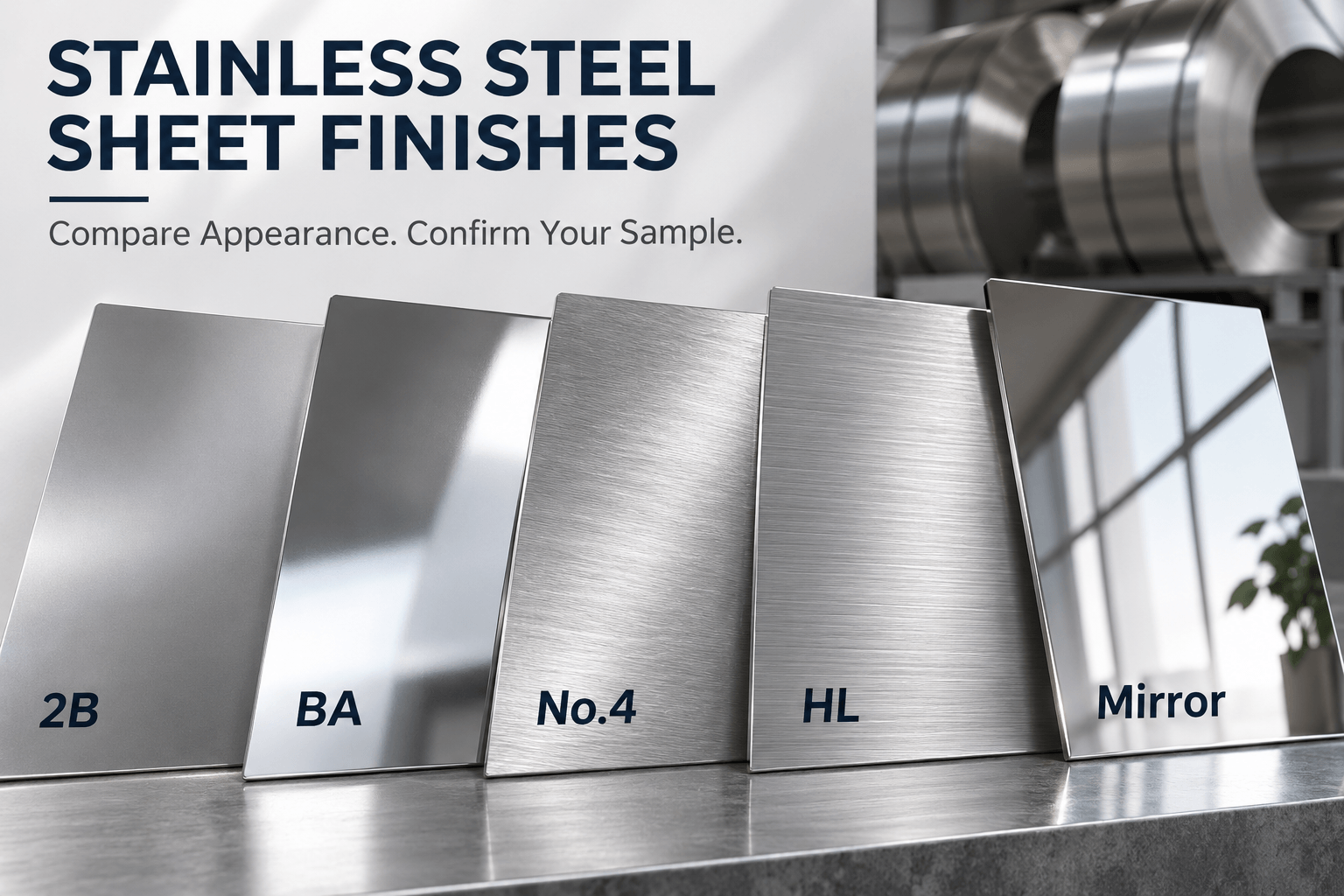
Ag roghnú stainless steel sheet finishes involves more than selecting a bright or brushed appearance. The surface affects visual consistency, fabrication planning, protective film selection and incoming inspection.
This guide compares 2B, BA, No.4, HL and mirror finishes and explains how to define your requirements before ordering. For available material options, explore our stainless steel sheet products.
Start with two separate decisions: specify the stainless steel grade for the service conditions, then specify the surface finish for appearance and functional needs. A finish name does not identify the alloy or guarantee suitability for a particular environment.
In This Guide
- Stainless Steel Finish Comparison
- 2B vs BA Stainless Steel
- No.4 vs HL Hairline Finish
- BA vs Mirror Finish
- Choosing a Finish by Application
- Sample Approval and Surface Inspection
- Protective Film and Packaging
- Stainless Steel Sheet RFQ Checklist
- Ceisteanna coitianta
Stainless Steel Sheet Finishes: Quick Comparison
Use this table to shortlist a finish. The descriptions indicate typical appearances; actual material can vary with the producer, processing route and agreed specification.
| Bailchríoch | Cuma tipiciúla | Surface Character | What Buyers Should Confirm |
|---|---|---|---|
| 2b | Grey surface with soft reflectivity | Cold-rolled mill finish | Whether its appearance is acceptable on exposed parts |
| Ba | Bright, reflective appearance | Bright-annealed mill finish | Required brightness and acceptable reflection quality |
| U.4 | Directional brushed appearance | Mechanically finished surface | Texture, grain direction and approved sample |
| HL | Typically long, continuous-looking hairline grain | Decorative directional finish | Line character, orientation and panel-to-panel matching |
| Scáthán | Highly reflective polished appearance | Fine polishing and buffing | Reflection clarity, haze and permissible polishing marks |
Finish labels are a starting point, not a complete acceptance specification. For visible architectural components, agree on a physical reference sample and inspection conditions before approving the order.
Need Help Specifying Your Sheets?
Send your grade, dimensions, application and preferred finish. Include a sample reference or appearance requirements when adjacent panels need to match. Discuss Your Sheet Requirements.
2B vs BA Stainless Steel: What Is the Difference?
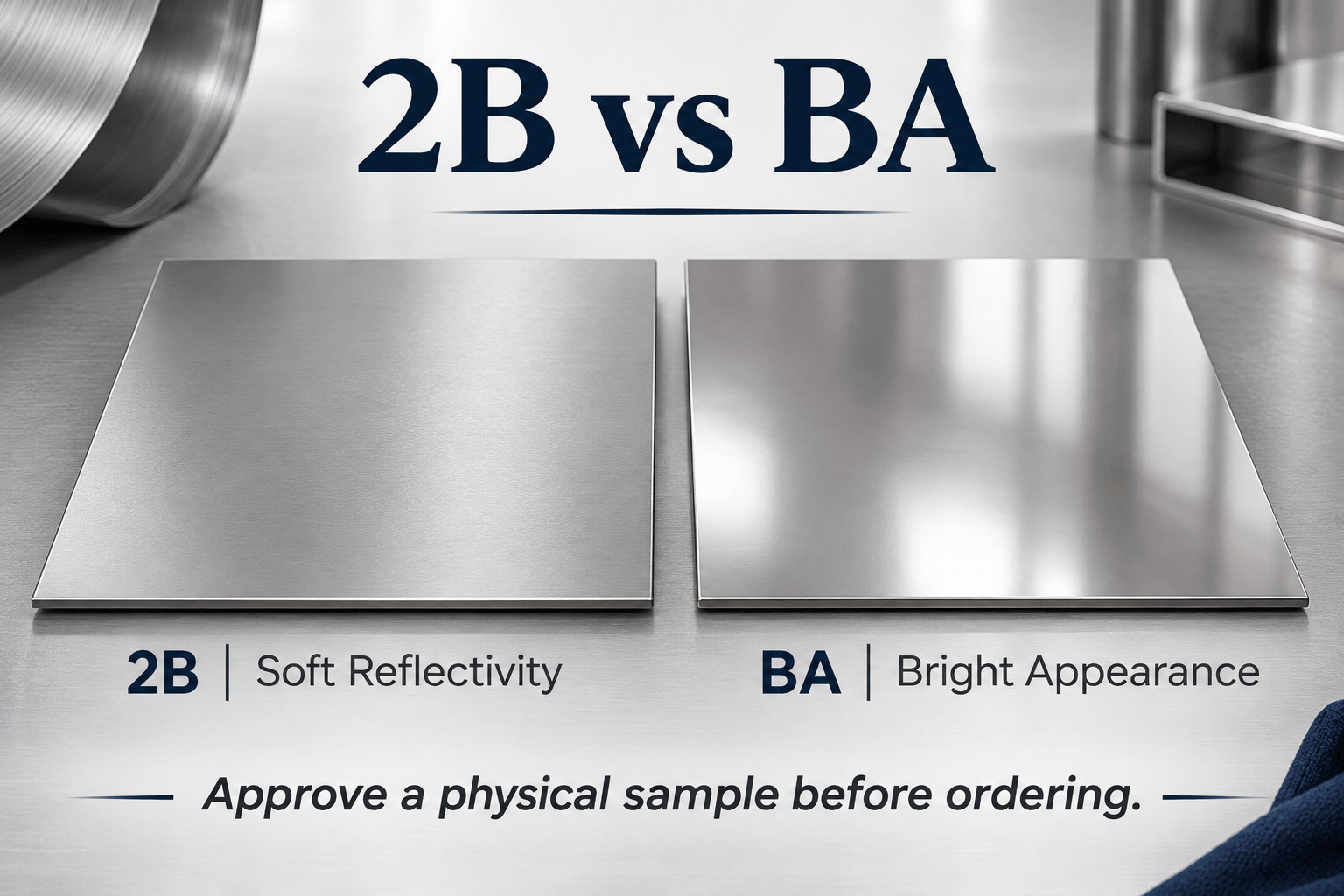
2B stainless steel is cold rolled, annealed and descaled, then given a light final rolling pass. Its appearance is generally grey with a soft sheen.
BA stainless steel is bright annealed in a controlled atmosphere and typically looks brighter and more reflective.
What Should You Confirm Before Ordering?
Decide whether the supplied surface will remain visible or undergo further polishing, coating or fabrication. If appearance matters, ask to review a representative sample in the specified grade and thickness, rather than relying on a photograph of a different product.
- Identify which side will be visible after installation.
- Confirm whether mill marks are acceptable on that side.
- Compare samples under the same lighting and viewing angle.
- Record any planned processing that could change the appearance.
No.4 vs HL: Brushed and Hairline Stainless Steel Finishes
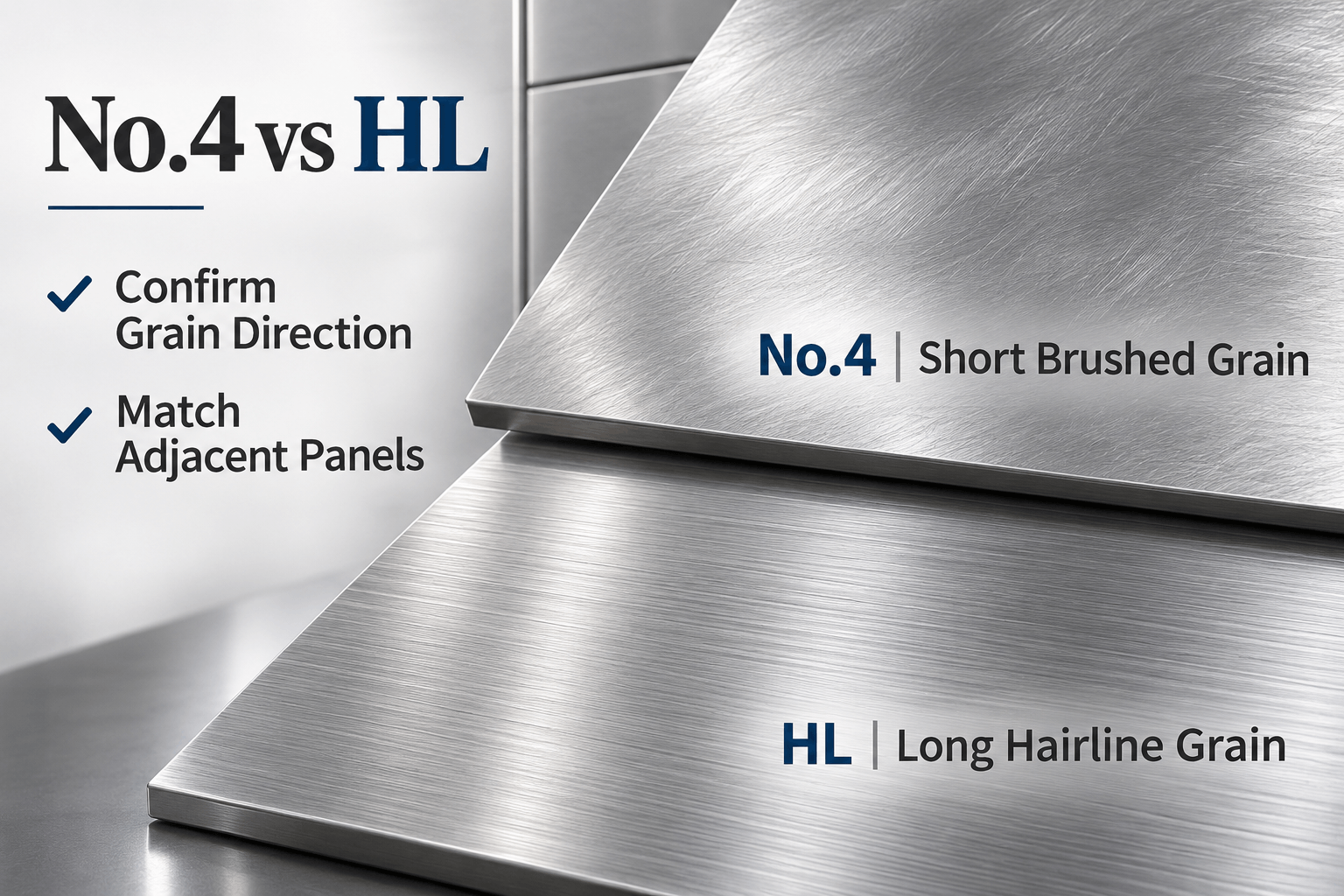
No.4 and HL both describe directional appearances. In commercial usage, No.4 commonly has a shorter brushed texture, while HL, or hairline, usually shows longer continuous-looking lines. Supplier terminology and processing results can differ, so these descriptions should be confirmed against samples.
Write Grain Direction into the Order
Avoid specifying only “vertical grain,” because the meaning depends on how the sheet is positioned. Define the direction relative to the dimensions or a drawing.
Mar shampla: grain parallel to the 2440 mm sheet length. This is an example specification, not a standard size requirement.
For wall cladding or elevator panels, mark the intended installation direction and panel sequence. Request consistent processing and compare panels together before fabrication.
Do not rely on an abrasive grit number alone. Agree on the finished appearance as well. If surface roughness is functionally important, specify the required parameter, limit and measurement method separately.
BA vs Mirror Stainless Steel: Brightness and Clarity
BA is produced by bright annealing. A mirror finish is produced through mechanical polishing and buffing. Both can look bright, but the process and resulting visual effect are different.
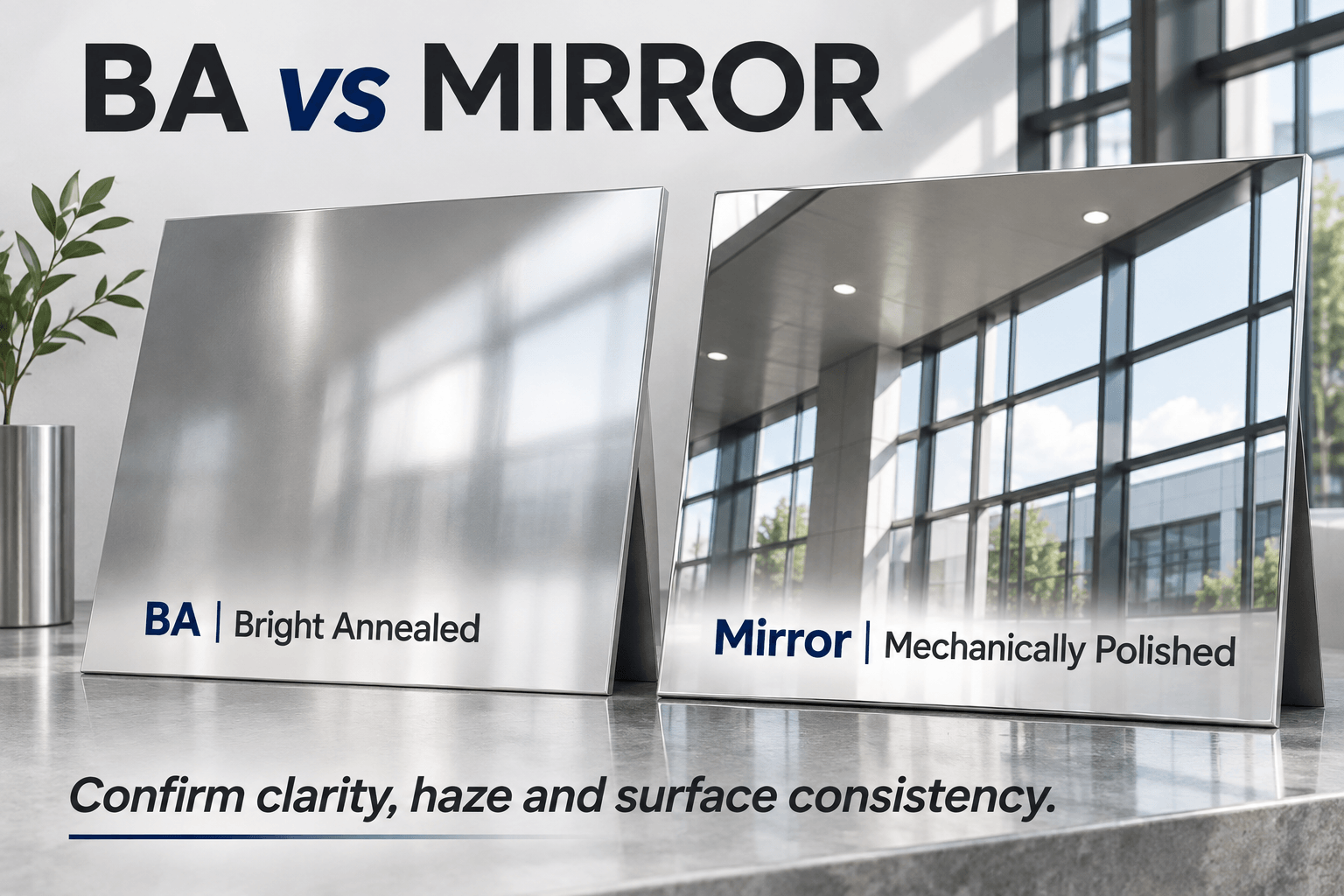
When buying mirror finish stainless steel sheet, describe the intended visual result. Ask to assess reflection sharpness, haze, residual polishing lines and the appearance of a larger panel where relevant.
If a quotation uses a commercial term such as “8K,” ask the supplier to identify the corresponding sample and acceptance criteria. Do not assume that the label alone guarantees identical results from different processors.
- Compare the sample using a consistent reflected object or pattern.
- Agree on the viewing distance and lighting.
- Specify the exposed face and any reverse-side requirement.
- For large decorative panels, review flatness and visual distortion separately.
How to Choose a Stainless Steel Finish by Application
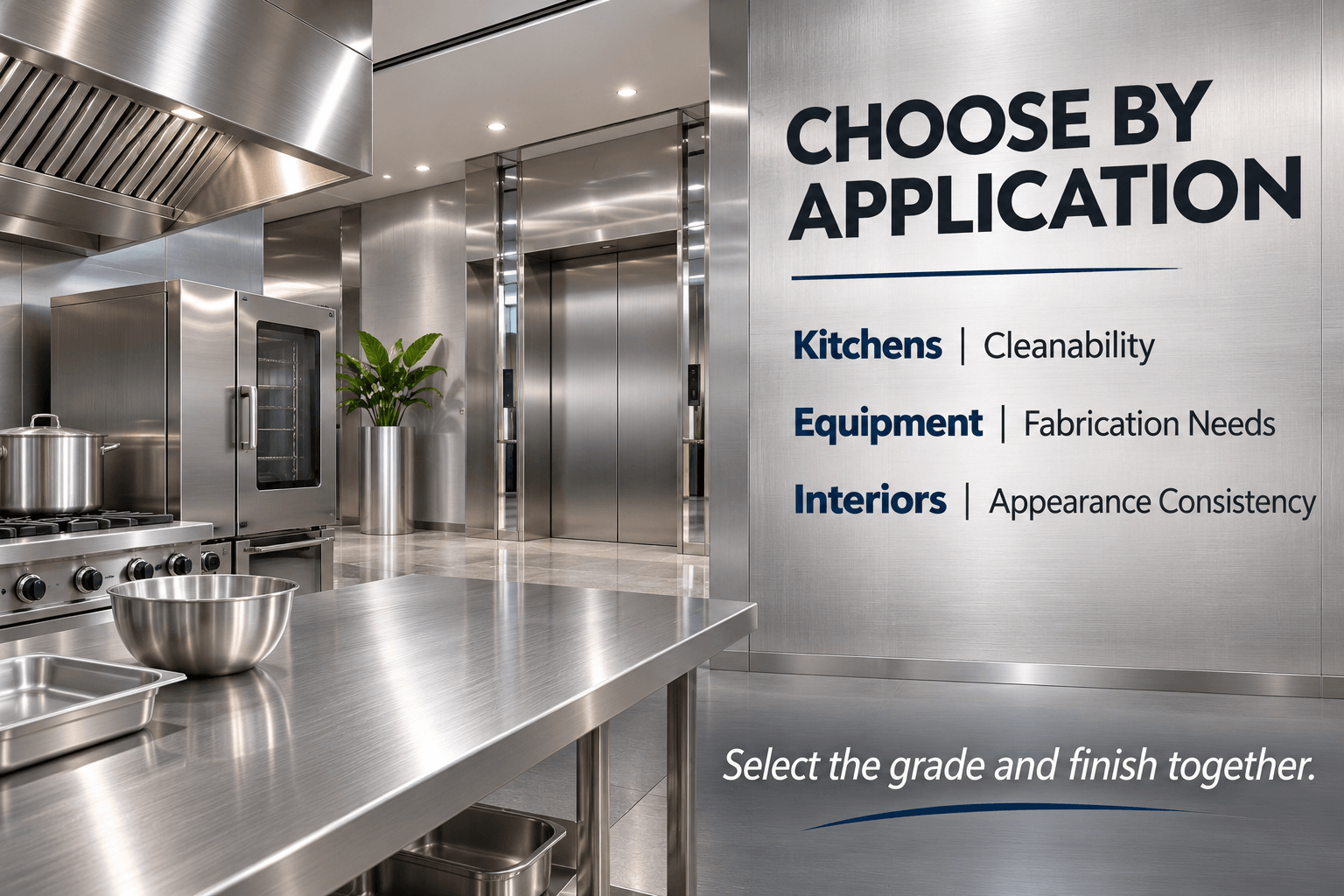
Start with the operating environment and fabrication process, then narrow the appearance options. The table below provides questions for supplier discussions rather than universal application approvals.
| Iarrchán | Finishes to Discuss | Priority Questions |
|---|---|---|
| Trealamh cistine | 2B or No.4, depending on the component | Is the surface food-contact or decorative? What cleaning, roughness and fabrication requirements apply? |
| Equipment enclosures | 2B, BA or No.4 | Which faces remain visible? Will welding, bending or further finishing change them? |
| Elevator and wall panels | HL, No.4 or mirror | How will grain, reflection and adjacent-panel appearance be matched? |
| Baile Átha Troim maisiúil | BA or mirror | What reflection quality is needed? How will the face be protected during forming and assembly? |
| Outdoor components | Project-specific selection | What exposure, drainage, cleaning and grade requirements must be addressed before approving the finish? |
Review the material options on our 304 Bileog cruach dhosmálta is 316 and 316L stainless steel sheet pages, then specify the required finish separately.
Explore Stainless Steel Sheets for Your Project
Browse our stainless steel sheets for equipment, interior panels and decorative applications. Select a product to view its details, then confirm your required grade, surface finish, dimensions and protective film.


Sample Approval and Stainless Steel Surface Inspection
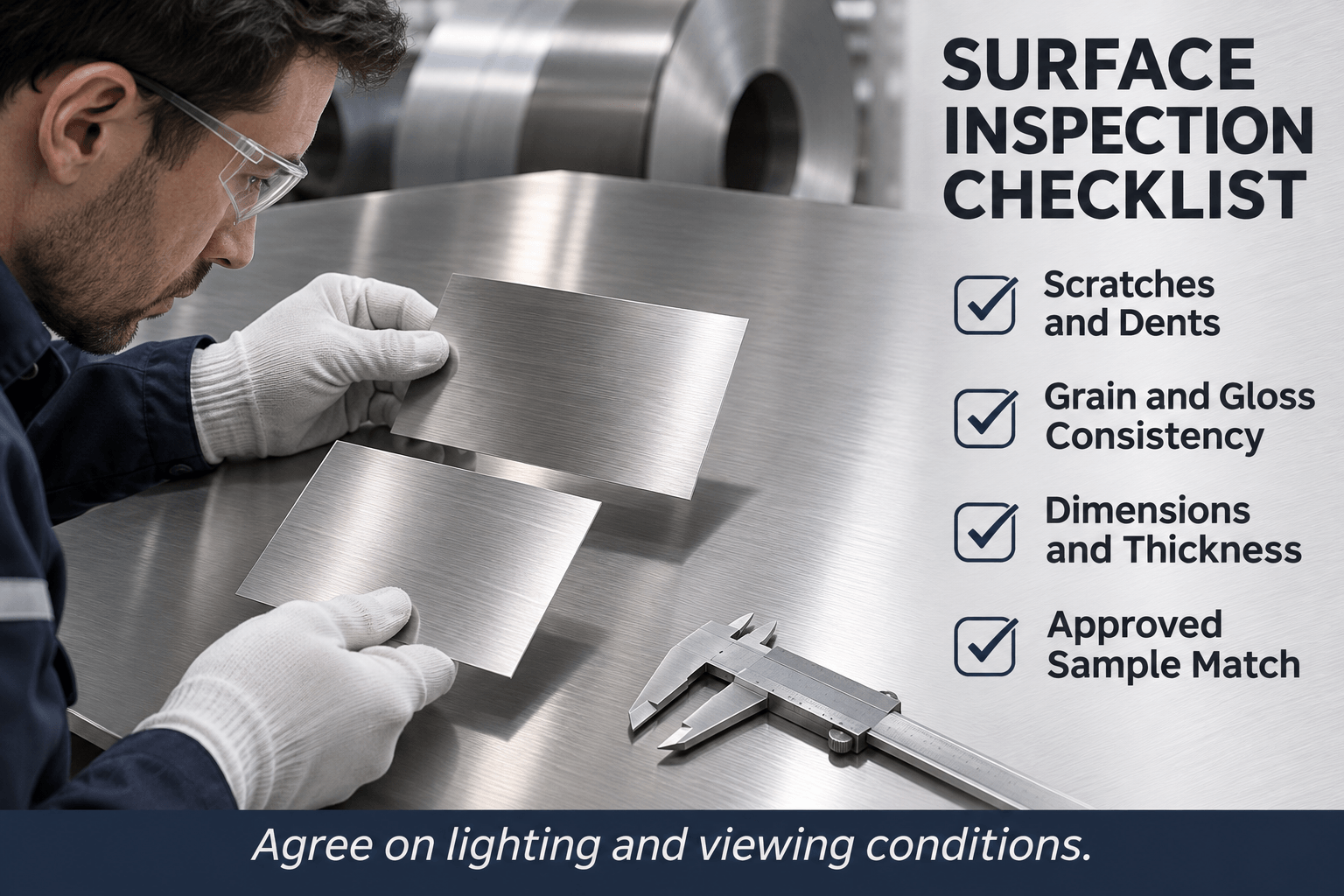
Define inspection requirements before production. The following checklist is a suggested purchasing framework; sampling quantities, tolerances and rejection limits should be agreed in the contract.
1. Retain an Approved Reference Sample
Label the sample with its approval reference, finish, grade, visible side and grain direction. Keep matching references with the buyer and supplier where practical. For large installations, consider an agreed larger panel or mock-up.
2. Define the Visual Inspection Conditions
Record the lighting, viewing distance, viewing angle and surface condition. Agree how protective film will be removed for inspection and whether the inspected area will need new protection.
3. Check Surface Defects and Consistency
Inspect the specified face for scratches, dents, stains, polishing irregularities and other agreed defects. Compare grain and gloss across multiple sheets intended for the same installation. Record the locations and dimensions of suspect areas.
4. Verify Dimensions and Order Identification
Check thickness, width, length and any agreed flatness requirements using suitable measuring equipment. Match package identification and material documents to the purchase order. A material certificate alone does not demonstrate decorative appearance acceptance.
5. Document Nonconforming Material Before Processing
Keep affected sheets identifiable, photograph the issue with the package or batch reference, and contact the supplier before cutting or installing the material. Follow the agreed inspection and claims procedure.
Protective Film and Packaging for Stainless Steel Sheets
Include film and packaging requirements in the quotation request. Film should be selected for the intended processing and handling conditions, not simply by its color or printed appearance.
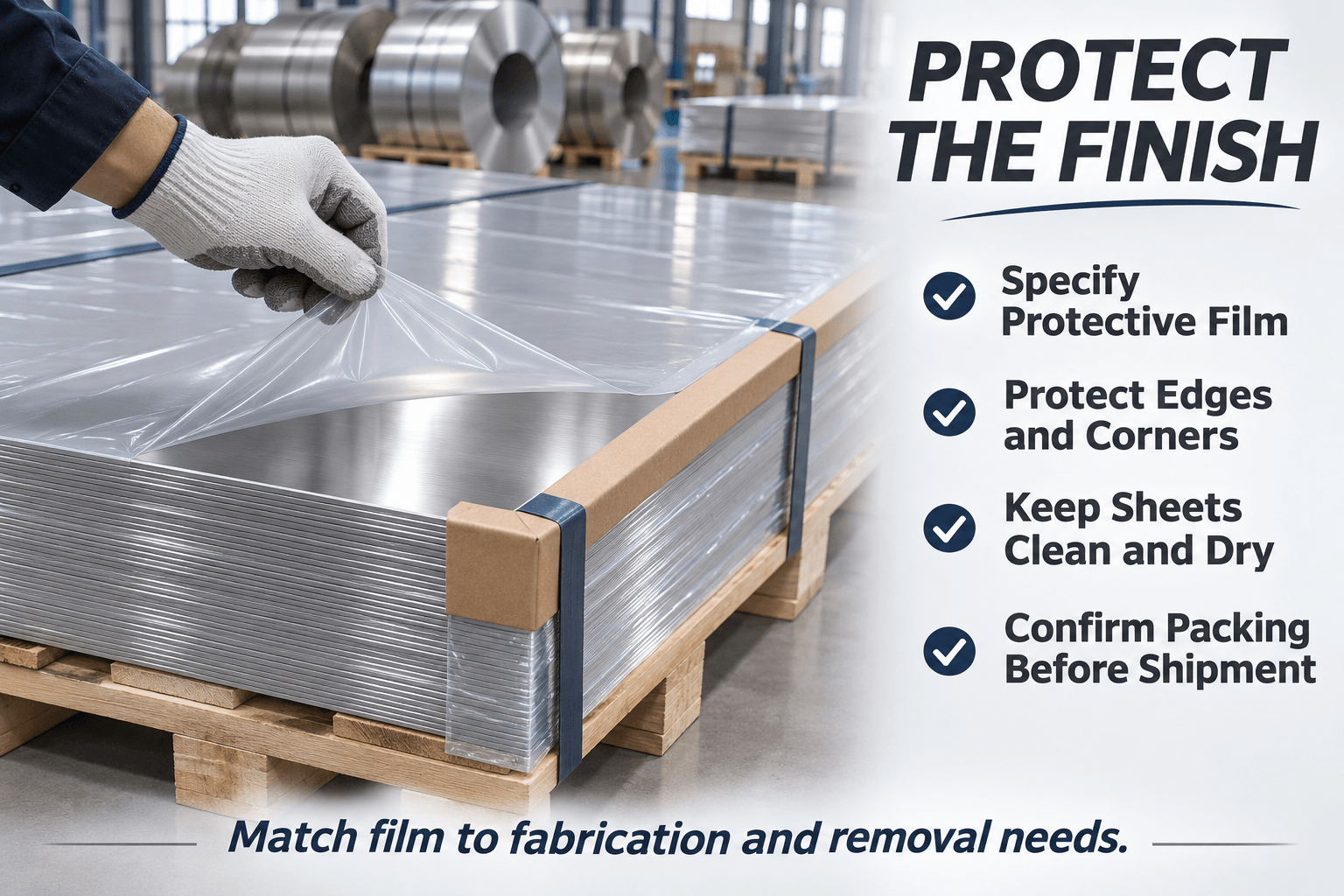
- Protected faces: Specify one-sided or two-sided film and identify the decorative face.
- Processing compatibility: Tell the supplier whether sheets will be laser cut, bent or otherwise processed with the film in place.
- Storage and removal: Request the film supplier’s storage conditions and removal guidance, including any temperature or exposure restrictions.
- Transport protection: Agree on sheet separation, corner guards, edge protection, moisture protection and package support.
- Identification: Request labels showing the dimensions, finish, quantity and relevant order or batch reference.
Packaging photographs can document the shipping arrangement. They should complement the agreed inspection records rather than replace surface approval.
RFQ Checklist: What to Include in Your Inquiry
A complete inquiry helps suppliers quote comparable material and reduces assumptions about what “brushed” or “mirror” means. Include the following information:
- Grade and material standard: Specify both where required.
- Toisí: Thickness, width and length, with units.
- Tolerances: State the applicable requirements.
- Críoch: 2B, BA, No.4, HL or mirror, with a sample reference if applicable.
- Grain direction: Define it relative to sheet dimensions or a drawing.
- Finished sides: Identify the visible face and reverse-side requirements.
- Protection: Film type or processing needs and protected sides.
- Quantity: Number of sheets or required weight.
- Iarratas: Include fabrication and installation requirements.
- Cigireacht agus doiciméid: List sample approval and acceptance requirements.
- Packing and delivery: Destination port, delivery basis and requested schedule.
Copy-and-Use Inquiry Template
Please quote stainless steel sheets with the following requirements:
- Grade and material standard:
- Thickness x width x length:
- Dimensional tolerances:
- Surface finish:
- Approved sample or drawing reference:
- Grain direction:
- Visible face and reverse-side requirements:
- Protective film and processing method:
- Quantity:
- Iarratas:
- Inspection and documentation requirements:
- Packaging requirements:
- Destination port and delivery basis:
- Requested delivery schedule:
Please identify any deviations from these requirements in your quotation.
Request a Stainless Steel Sheet Quotation
Send your specifications to Henan Gengfei Industrial Co., Ltd. Include your required surface finish and sample reference so the quotation can address both material and appearance requirements. Send Your Specifications.
View our stainless steel sheet range for related product information.
Ceisteanna coitianta
What is the difference between 2B and BA stainless steel?
2B generally has a grey, softly reflective appearance, while BA is brighter and more reflective. They use different finishing routes. For appearance-sensitive orders, compare representative physical samples.
Is BA stainless steel the same as mirror finish?
No. BA is a bright-annealed finish, while mirror finishes are mechanically polished and buffed. Specify the required reflection quality and approve a sample rather than ordering by brightness alone.
Are No.4 and hairline stainless steel finishes interchangeable?
Do not treat them as interchangeable without approval. Their grain appearance can differ, and commercial descriptions vary. Confirm the texture and direction against an agreed reference sample.
Does No.4 specify one exact surface roughness?
Do not assume a single roughness value from the name alone. If roughness is important, specify the required parameter, acceptance limit and measurement procedure in the order.
Does a surface finish determine the stainless steel grade?
No. Grade and finish are separate specifications. Identify the required alloy and material standard independently of the decorative or mill finish.
Can I approve a decorative surface using only photographs?
Photographs help with initial discussion, but lighting, angle and screen settings can change the appearance. Use a physical sample or agreed mock-up for final visual approval.
How can I reduce mismatches between adjacent panels?
Agree on a reference sample, grain direction, processing consistency and installation orientation. Compare the supplied panels together under the agreed lighting before cutting or installation.
What should I check when the sheets arrive?
Check package condition, identification, dimensions, visible surface defects, grain, gloss and the approved sample match. Apply the inspection plan and acceptance limits agreed in the purchase order.
Tagairtí Teicniúla
Images in this article are AI-generated illustrations for explanation, not photographs of a specific shipment or acceptance reference samples. Final supply and acceptance requirements should follow the agreed purchase specification.
