


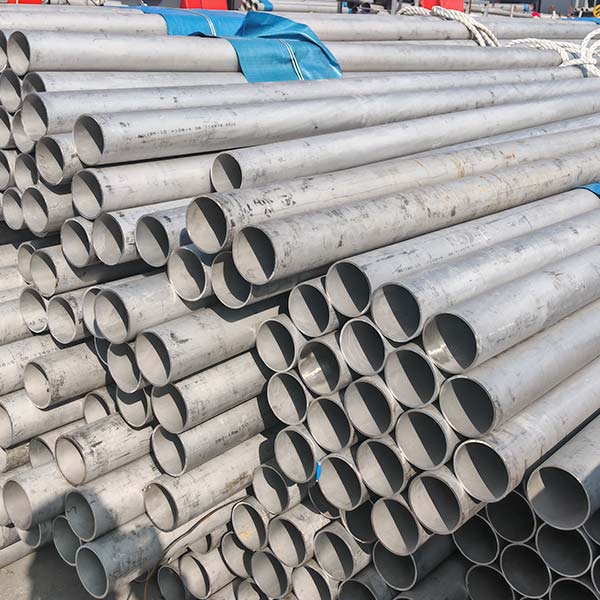


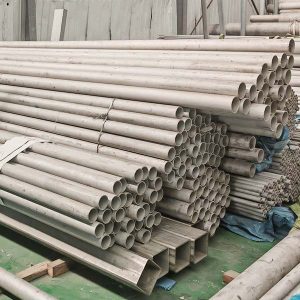
- Description
- Reviews (0)
Description
What is the 316 Stainless Steel Pipe/Tube?
316 stainless steel pipe and tube are high-performance austenitic stainless steel products containing molybdenum, which improves corrosion resistance, especially against chlorides and other industrial chemicals. Known for its excellent strength, formability, and weldability, 316 stainless steel is widely used in demanding environments such as marine, pharmaceutical, and chemical processing industries.
Available in seamless, welded, and precision finishes, 316 stainless steel pipes and tubes meet ASTM and other international standards, ensuring durability, hygiene, and reliable performance under harsh conditions.
Technical Parameters of 316 Stainless Steel Pipe
| Parameter | Value/Standard |
|---|---|
| Material Grade | 316 / 316L |
| Standards | ASTM A312, ASTM A213, ASTM A269, ASTM A249 |
| Outer Diameter Range | 6mm – 630mm |
| Wall Thickness Range | 0.5mm – 30mm |
| Length | 6m standard (custom lengths available) |
| Surface Finish | Annealed & pickled, polished, mill finish |
| Manufacturing Type | Seamless / Welded |
| Tensile Strength | ≥ 515 MPa |
| Yield Strength | ≥ 205 MPa |
| Elongation | ≥ 40% |
| Hardness (Brinell) | ≤ 217 HB |
| Operating Temperature | Up to 870°C (intermittent), 925°C (continuous) |
Chemical Composition of 316/316L Stainless Steel (ASTM A312/A213/A269)
Mechanical Properties of 316/316L Stainless Steel (ASTM A312/A213/A269)
Physical Properties of 316/316L Stainless Steel
Advantages of 316 SS Pipes/Tubes
- Corrosion Resistance: Excels in chloride/saline environments (marine, chemical)
- High-Temp Stability: Performs well up to 870°C (1600°F)
- Hygienic Surface: Easy to clean; ideal for food/pharma
- Formability: Easily welded, bent, and fabricated
- Non-Magnetic: Annealed state (cold working adds slight magnetism)
- Eco-Friendly: 100% recyclable
Applications of 316 Stainless Steel Tube

Comparison of Stainless Steel Pipe/Tube Grades
316 vs. 304 Stainless Steel
| Property | 316 | 304 |
|---|---|---|
| Molybdenum | 2–3% | None |
| Corrosion Resistance | Superior (chlorides) | Moderate |
| Cost | ~20–30% Higher | Lower |
| High-Temp Strength | Better | Good |
| Marine Suitability | Excellent | Limited |
316 vs. 316L Stainless Steel
| Property | 316 | 316L |
|---|---|---|
| Carbon Content | ≤0.08% | ≤0.03% |
| Weldability | Good | Excellent (less carbide precipitation) |
| Post-Weld Corrosion | Possible in HAZ | Minimal |
| Strength | Slightly Higher | Slightly Lower |
| Applications | General | Welded/corrosive environments |
Seamless vs. Welded Stainless Steel Pipe/Tube
How to Choose the Right Stainless Steel Pipe/Tube Grade
Selecting the right stainless steel grade depends on your application’s specific requirements. Here are the key factors to consider:
✅ Corrosion Resistance
-
For general indoor use, 304 is usually sufficient.
-
For environments with chlorides (e.g., seawater, salt spray), 316 is better due to its molybdenum content, which resists pitting and crevice corrosion.
-
For high-temperature oxidation resistance, 310S is a preferred choice.
✅ Operating Temperature
-
304 and 316 perform well up to 870–925°C.
-
If your process involves temperatures above 1000°C, consider 310S.
✅ Strength Requirements
-
All three grades offer good tensile and yield strength, but you should verify the mechanical specifications against your pressure or structural needs.
✅ Weldability & Fabrication
-
All grades (304, 316, 310S) have excellent weldability.
-
Choose low-carbon versions (like 316L) if welding without post-weld heat treatment to avoid sensitization.
✅ Budget
-
304 is more economical for standard uses.
-
316 is a bit more costly but worth it for superior corrosion resistance.
-
310S is higher cost but suitable for extreme heat.
✅ Industry Standards
-
Always ensure the chosen grade meets relevant ASTM or EN standards for your project.
Simple Grade Selection Tips
-
Indoor or decorative use? → 304
-
Marine or chemical environment? → 316
-
High-temperature industrial furnace? → 310S
-
Frequent welding? → Choose low-carbon variants like 316L
Contact us today and let us help you with your stainless steel needs!
SEND US AN EMAIL: [email protected]
Reviews
There are no reviews yet.