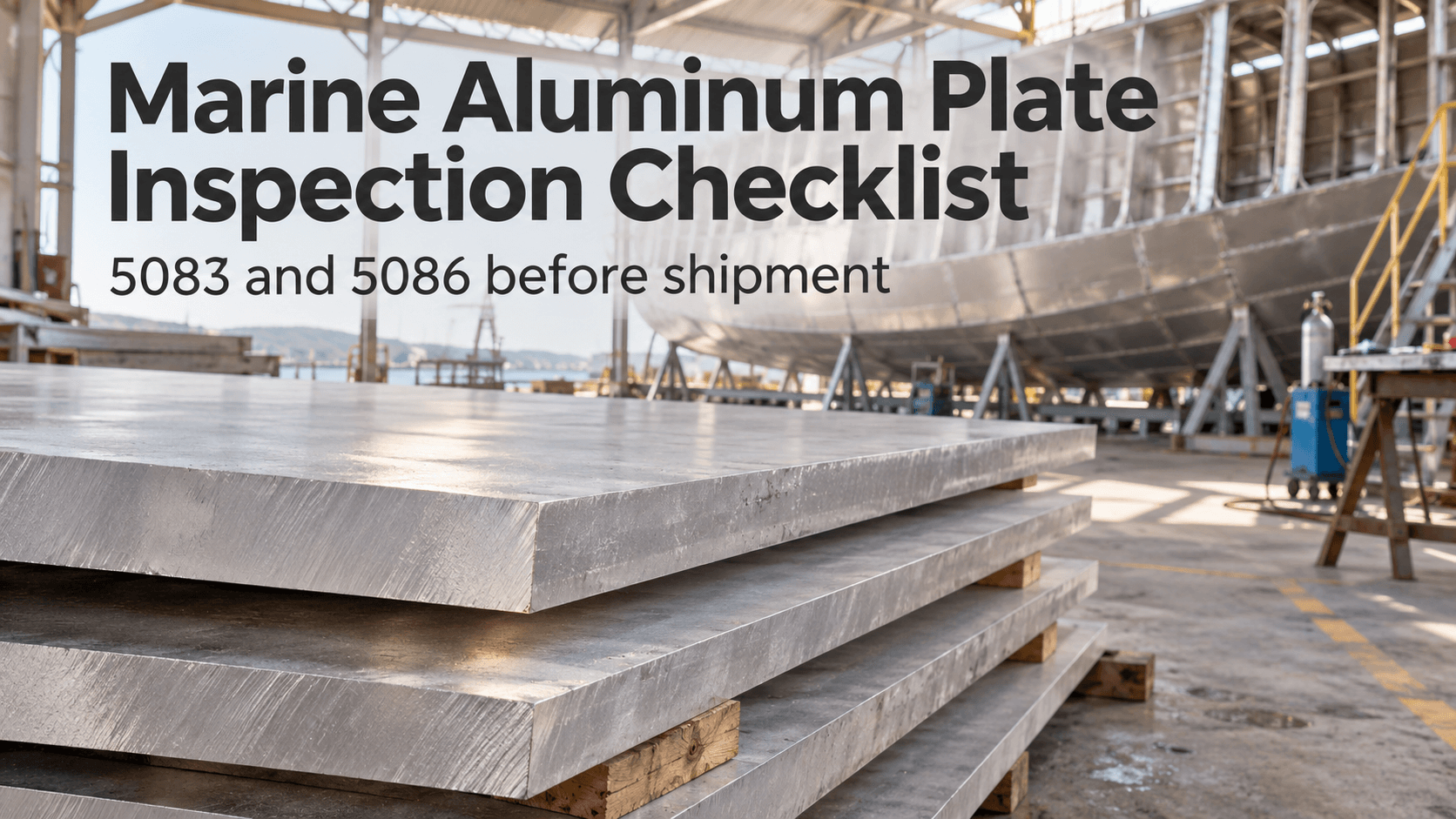
Marine aluminum plate inspection is an essential step in international aluminum procurement, especially for shipbuilding, yacht manufacturing, offshore engineering and marine fabrication projects. When purchasing 5083 or 5086 aluminum plate, buyers should not focus only on the alloy designation or quoted price. Material traceability, temper condition, mechanical properties, dimensional accuracy, corrosion testing and export packaging must also be carefully verified.
5083 and 5086 aluminum alloys are widely considered for marine applications because of their useful combination of strength, weldability and corrosion resistance. However, the actual suitability of a plate depends on its alloy, temper, thickness, applicable material standard and project requirements.
This comprehensive guide explains how to inspect marine aluminum plate before shipment. It covers material identification, Mill Test Certificates (MTC), thickness measurement, surface quality, mechanical testing, corrosion test reports and export packaging. It also provides a practical pre-shipment inspection checklist for aluminum importers, shipbuilders, distributors and marine engineering contractors.
1. What Should Buyers Check Before Purchasing Marine Aluminum Plate?
Before placing an order, buyers should establish clear technical requirements with the aluminum plate supplier. A complete purchase specification helps prevent misunderstandings between the buyer, manufacturer, inspection company and shipping department.
For marine aluminum plate, the purchase order should clearly identify the material grade, temper, applicable standard, dimensions, surface condition and required inspection documents.
Essential Purchase Specifications
| Specification | Information to Confirm |
|---|---|
| Product Form | Aluminum sheet or aluminum plate |
| Alloy | 5083, 5086 or another specified grade |
| Temper | H116, H321 or another agreed condition |
| Material Standard | ASTM B928/B928M, ASTM B209/B209M or another specified standard |
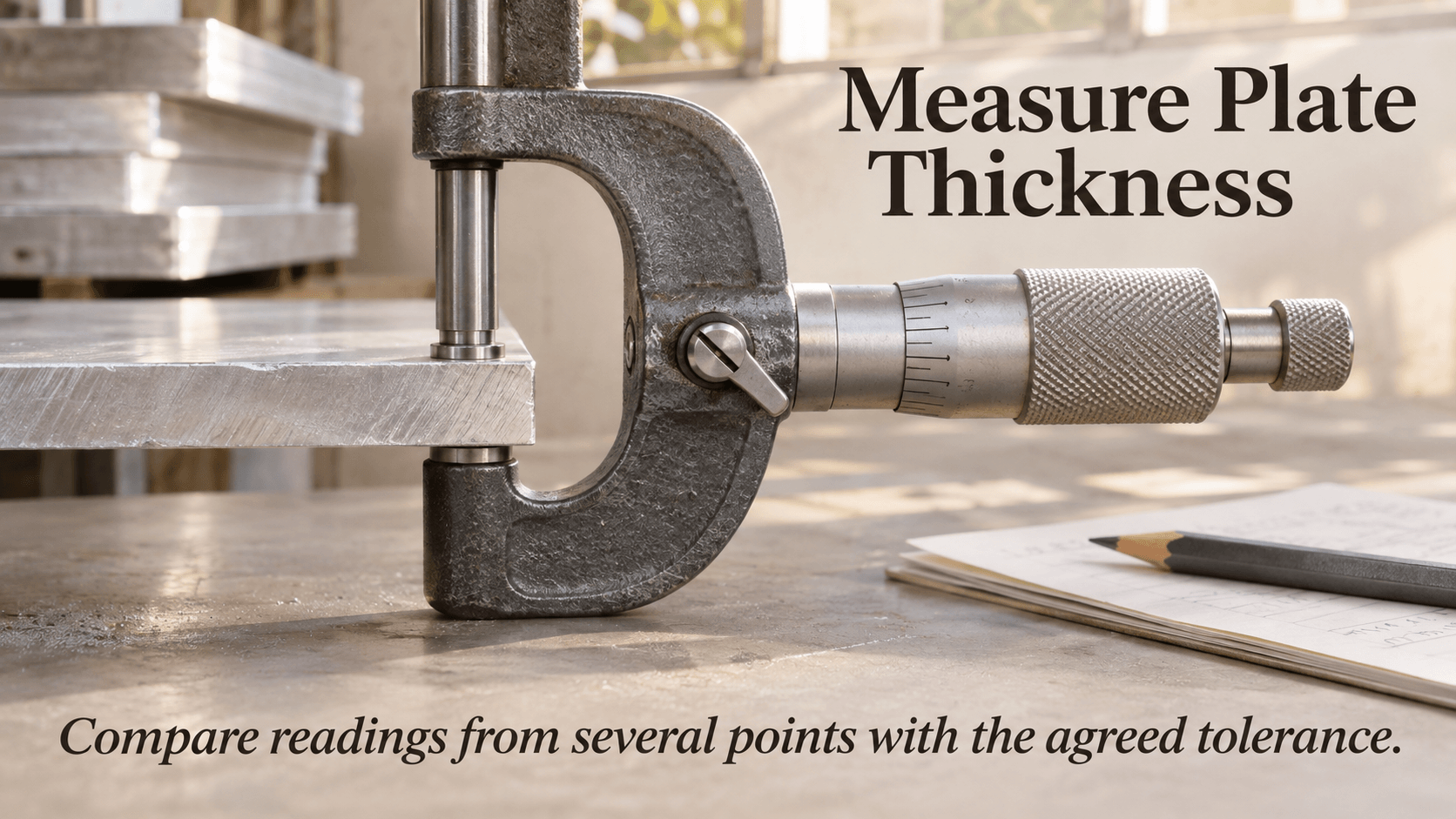
| Thickness | Required nominal thickness and tolerance |
| Dimensions | Required width and length |
| Surface Finish | Mill finish or another agreed finish |
| Mechanical Properties | Tensile strength, yield strength and elongation requirements |
| Inspection Documents | MTC, test reports and third-party inspection if required |
| Packaging | Protective film, pallets, wooden crates and shipping marks |
For marine structural applications, buyers should confirm whether the project requires ASTM B928/B928M compliance or another specific marine material specification. Simply writing 5083 aluminum plate or 5086 aluminum plate on a purchase order may not be sufficient.
2. Verify Aluminum Alloy and Temper: 5083 vs 5086
Alloy and temper identification is one of the most important steps in marine aluminum plate inspection. Although 5083 and 5086 belong to the 5xxx aluminum-magnesium series, they should not be treated as interchangeable materials without checking the engineering requirements.
Both alloys are considered for marine fabrication because of their corrosion resistance, weldability and mechanical properties. The correct selection depends on the structural design, required thickness, temper, applicable material standard and project requirements.
5083 Marine Aluminum Plate
5083 aluminum plate is widely used in shipbuilding and marine engineering. Typical applications include ship hull structures, yacht construction, marine decks, offshore equipment and welded aluminum structures.
For demanding marine applications, 5083-H116 and 5083-H321 may be specified depending on the applicable standard and project requirements. Buyers should verify the actual material certification rather than relying only on the alloy name.
5086 Marine Aluminum Plate
5086 aluminum plate is another important aluminum-magnesium alloy used in marine manufacturing. It can be considered for vessel structures, marine panels, welded components and other aluminum fabrication applications.
As with 5083, the required temper, thickness and mechanical properties must be confirmed before production or shipment.
5083 vs 5086 Aluminum Plate Comparison
| Comparison Item | 5083 Aluminum | 5086 Aluminum |
|---|---|---|
| Alloy Series | 5xxx Series Aluminum-Magnesium Alloy | 5xxx Series Aluminum-Magnesium Alloy |
| Common Marine Tempers | H116, H321 and other specified conditions | H116, H321 and other specified conditions |
| Marine Applications | Ship hulls, decks and welded structures | Marine structures, panels and welded components |
| Weldability | Suitable for many welded marine applications | Suitable for many welded marine applications |
| Corrosion Performance | Depends on alloy, temper and material condition | Depends on alloy, temper and material condition |
| Selection Factors | Engineering requirements and specified standard | Engineering requirements and specified standard |
Important: There is no universal rule that one alloy is always better than the other. Buyers should compare the actual mechanical properties, corrosion test requirements, thickness and delivery condition for the specific order.
Looking for high-quality 5083 or 5086 aluminum plate for marine applications? Explore our Aluminum Sheet and Plate range for available alloy grades, dimensions and customized supply options.
3. Check Plate Marking and Material Traceability
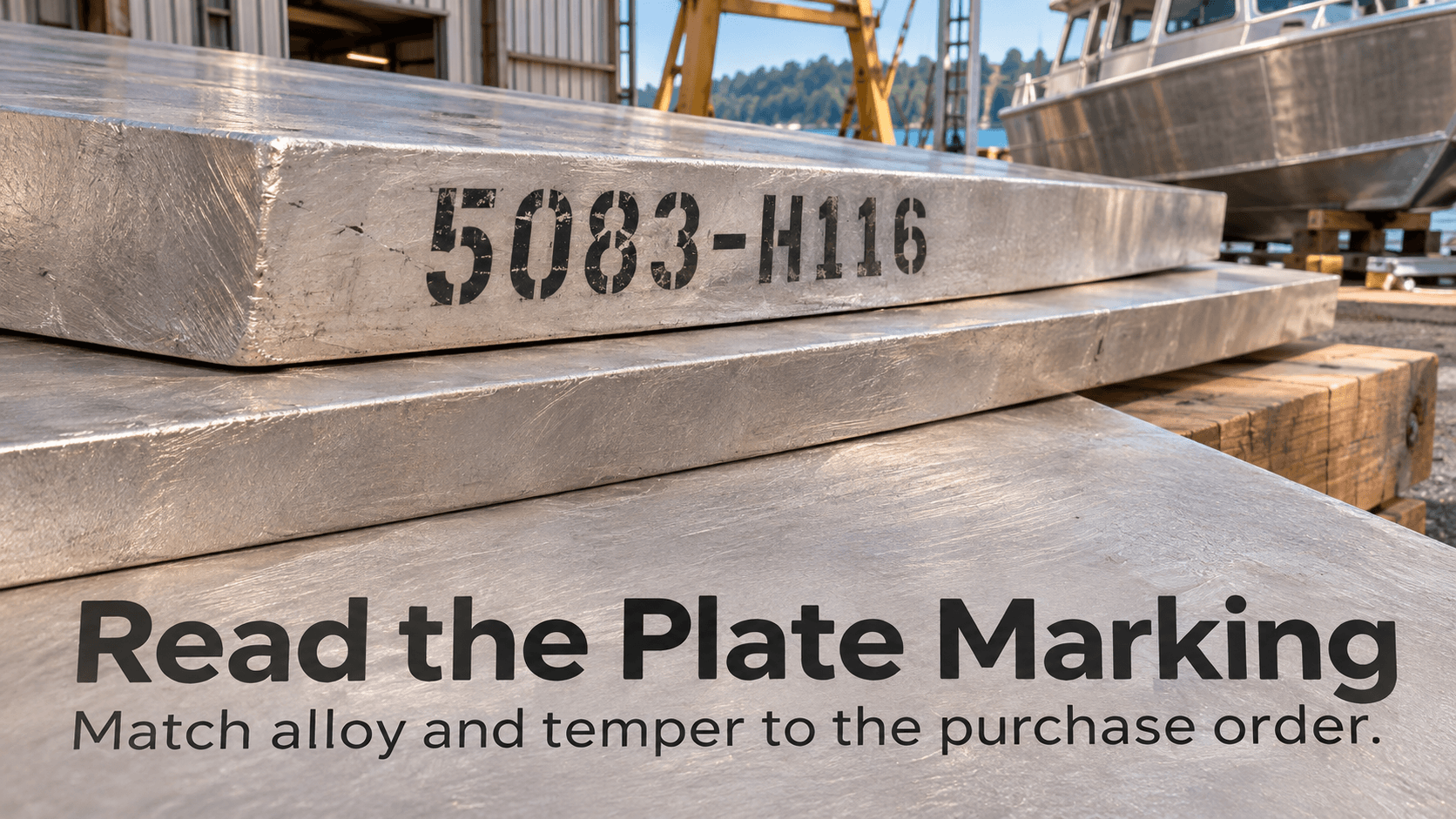
Material traceability is essential for marine aluminum plate procurement. Buyers should be able to connect each delivered plate or bundle with its corresponding production lot and material documentation.
For large shipbuilding projects, traceability helps the purchasing team, quality department and engineering team identify the origin and condition of the supplied material.
What Information Should Be Checked?
- Manufacturer or producer identification
- Aluminum alloy designation
- Temper designation
- Product dimensions
- Production lot, cast or melt identification
- Applicable material standard
- Purchase order or bundle number
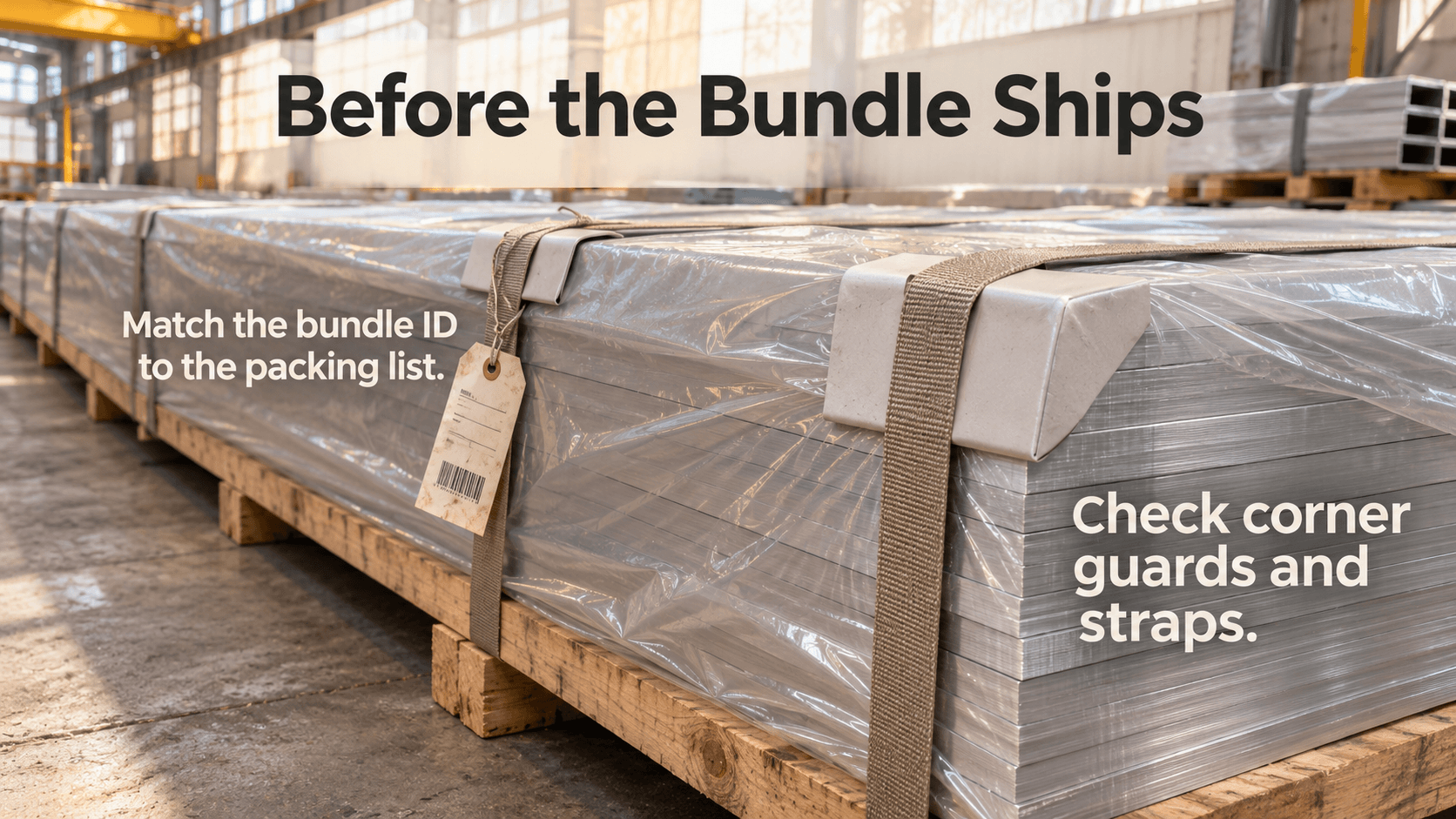
Compare the identification information on the aluminum plate, bundle label and packing list with the corresponding MTC. Any mismatch should be clarified before the goods are accepted or shipped.
Under ASTM B928/B928M, inspection lots are identified according to specified material characteristics, including mill form, alloy, temper, cast or melt lot and thickness. Therefore, accurate lot identification is an important part of the inspection process.