Marine aluminum plate inspection is an essential step in international aluminum procurement, especially for shipbuilding, yacht manufacturing, offshore engineering and marine fabrication projects. When purchasing 5083 or 5086 aluminum plate, buyers should not focus only on the alloy designation or quoted price. Material traceability, temper condition, mechanical properties, dimensional accuracy, corrosion testing and export packaging must also be carefully verified.

5083 and 5086 aluminum alloys are widely considered for marine applications because of their useful combination of strength, weldability and corrosion resistance. However, the actual suitability of a plate depends on its alloy, temper, thickness, applicable material standard and project requirements.

This comprehensive guide explains how to inspect marine aluminum plate before shipment. It covers material identification, Mill Test Certificates (MTC), thickness measurement, surface quality, mechanical testing, corrosion test reports and export packaging. It also provides a practical pre-shipment inspection checklist for aluminum importers, shipbuilders, distributors and marine engineering contractors.

1. What Should Buyers Check Before Purchasing Marine Aluminum Plate?

Before placing an order, buyers should establish clear technical requirements with the aluminum plate supplier. A complete purchase specification helps prevent misunderstandings between the buyer, manufacturer, inspection company and shipping department.

For marine aluminum plate, the purchase order should clearly identify the material grade, temper, applicable standard, dimensions, surface condition and required inspection documents.

Essential Purchase Specifications

Specification Information to Confirm
Product FormAluminum sheet or aluminum plate
Alloy5083, 5086 or another specified grade
TemperH116, H321 or another agreed condition
Material StandardASTM B928/B928M, ASTM B209/B209M or another specified standard
ThicknessRequired nominal thickness and tolerance
DimensionsRequired width and length
Surface FinishMill finish or another agreed finish
Mechanical PropertiesTensile strength, yield strength and elongation requirements
Inspection DocumentsMTC, test reports and third-party inspection if required
PackagingProtective film, pallets, wooden crates and shipping marks

For marine structural applications, buyers should confirm whether the project requires ASTM B928/B928M compliance or another specific marine material specification. Simply writing 5083 aluminum plate or 5086 aluminum plate on a purchase order may not be sufficient.

2. Verify Aluminum Alloy and Temper: 5083 vs 5086

Alloy and temper identification is one of the most important steps in marine aluminum plate inspection. Although 5083 and 5086 belong to the 5xxx aluminum-magnesium series, they should not be treated as interchangeable materials without checking the engineering requirements.

Both alloys are considered for marine fabrication because of their corrosion resistance, weldability and mechanical properties. The correct selection depends on the structural design, required thickness, temper, applicable material standard and project requirements.

5083 Marine Aluminum Plate

5083 aluminum plate is widely used in shipbuilding and marine engineering. Typical applications include ship hull structures, yacht construction, marine decks, offshore equipment and welded aluminum structures.

For demanding marine applications, 5083-H116 and 5083-H321 may be specified depending on the applicable standard and project requirements. Buyers should verify the actual material certification rather than relying only on the alloy name.

5086 Marine Aluminum Plate

5086 aluminum plate is another important aluminum-magnesium alloy used in marine manufacturing. It can be considered for vessel structures, marine panels, welded components and other aluminum fabrication applications.

As with 5083, the required temper, thickness and mechanical properties must be confirmed before production or shipment.

5083 vs 5086 Aluminum Plate Comparison

Comparison Item 5083 Aluminum 5086 Aluminum
Alloy Series5xxx Series Aluminum-Magnesium Alloy5xxx Series Aluminum-Magnesium Alloy
Common Marine TempersH116, H321 and other specified conditionsH116, H321 and other specified conditions
Marine ApplicationsShip hulls, decks and welded structuresMarine structures, panels and welded components
WeldabilitySuitable for many welded marine applicationsSuitable for many welded marine applications
Corrosion PerformanceDepends on alloy, temper and material conditionDepends on alloy, temper and material condition
Selection FactorsEngineering requirements and specified standardEngineering requirements and specified standard

Important: There is no universal rule that one alloy is always better than the other. Buyers should compare the actual mechanical properties, corrosion test requirements, thickness and delivery condition for the specific order.

Looking for high-quality 5083 or 5086 aluminum plate for marine applications? Explore our Aluminum Sheet and Plate range for available alloy grades, dimensions and customized supply options.
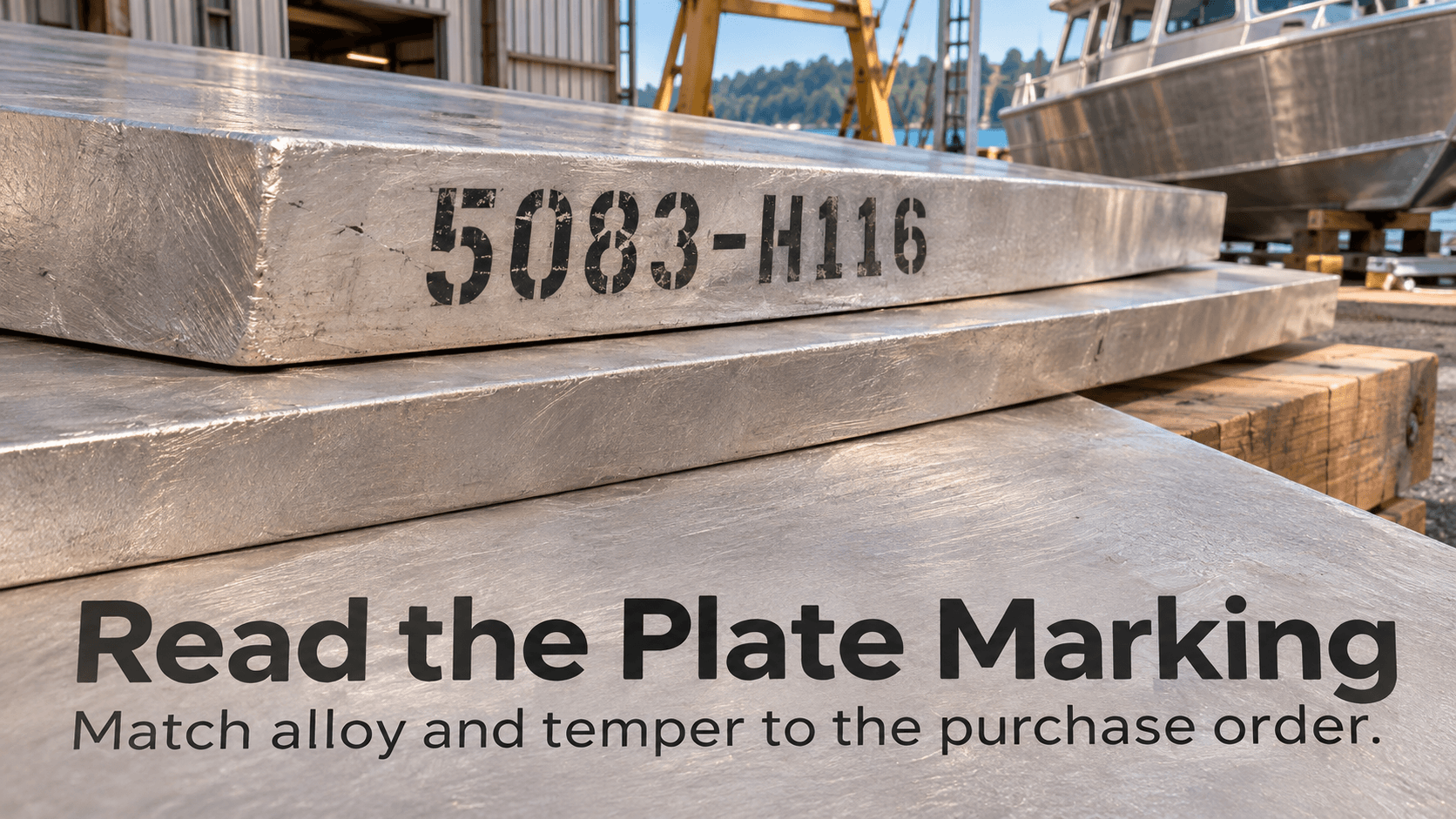
5083 H116 marine aluminum plate alloy and temper identification marking
Illustrative example of 5083-H116 material identification. Always compare actual plate markings with the purchase order and material certificate.

3. Check Plate Marking and Material Traceability

Material traceability is essential for marine aluminum plate procurement. Buyers should be able to connect each delivered plate or bundle with its corresponding production lot and material documentation.

For large shipbuilding projects, traceability helps the purchasing team, quality department and engineering team identify the origin and condition of the supplied material.

What Information Should Be Checked?

  • Manufacturer or producer identification
  • Aluminum alloy designation
  • Temper designation
  • Product dimensions
  • Production lot, cast or melt identification
  • Applicable material standard
  • Purchase order or bundle number

Compare the identification information on the aluminum plate, bundle label and packing list with the corresponding MTC. Any mismatch should be clarified before the goods are accepted or shipped.

Under ASTM B928/B928M, inspection lots are identified according to specified material characteristics, including mill form, alloy, temper, cast or melt lot and thickness. Therefore, accurate lot identification is an important part of the inspection process.

4. Review the Mill Test Certificate MTC

A Mill Test Certificate, commonly called an MTC, provides important information about the material supplied by the producer. It allows buyers to verify the chemical composition, mechanical properties and identification details against the purchase specification.

However, receiving a certificate is not enough. Buyers should carefully compare the information in the document with the actual delivered material.

Marine aluminum plate MTC certificate and production lot traceability inspection
Illustrative material traceability and certificate review. Actual MTC documents must come from the material producer.

Essential MTC Information

MTC Item What Buyers Should Verify
ManufacturerProducer name and identification
Material Grade5083 or 5086 as ordered
TemperH116, H321 or specified condition
Material StandardCorrect ASTM or other agreed specification
DimensionsThickness, width and length
Chemical CompositionMg, Mn, Si, Fe, Cu and other specified elements
Tensile StrengthActual test result
Yield StrengthActual test result
ElongationActual test result
Lot IdentificationMatching cast, melt or production lot reference

How to Verify an MTC

  1. Confirm that the alloy designation matches the purchase order.
  2. Check whether the temper is correct.
  3. Compare the certificate dimensions with the delivered plate.
  4. Check the chemical composition against the applicable standard.
  5. Review tensile strength, yield strength and elongation results.
  6. Match the production lot or cast number with the material marking.
  7. Check additional test reports when required by the purchase contract.

If the certificate does not identify the delivered material clearly, request clarification from the supplier before shipment approval.

5. Measure Aluminum Plate Thickness and Dimensions

Dimensional inspection is important because thickness and size directly affect material weight, fabrication allowances, structural design and installation requirements.

For marine aluminum plate, buyers should not rely only on the nominal thickness printed on the quotation or packing list. Actual measurements should be recorded and compared with the tolerances specified in the purchase order and applicable product standard.

Digital micrometer measuring marine aluminum plate thickness during pre shipment inspection
Use a suitable calibrated micrometer to measure aluminum plate thickness at the agreed inspection locations.

Recommended Thickness Measurement Procedure

  1. Prepare a suitable digital micrometer or other approved measuring instrument.
  2. Check the instrument condition and calibration status.
  3. Clean the measurement area to remove dirt and foreign particles.
  4. Check the instrument zero setting before measurement.
  5. Measure the plate at multiple agreed locations.
  6. Record the actual readings for inspection documentation.
  7. Compare the measurements with the specified thickness tolerance.

Other Dimensional Inspection Items

Item Inspection Method Purpose
ThicknessDigital micrometerVerify material thickness
WidthSteel tape or suitable measuring toolConfirm plate width
LengthSteel tape or suitable measuring toolConfirm plate length
FlatnessSuitable straightedge or approved methodCheck plate deformation
SquarenessSuitable dimensional measurementCheck dimensional accuracy

Why Thickness Tolerance Matters

Thickness deviations can affect the total weight of the aluminum order, cutting allowances and final component dimensions. For marine engineering projects, incorrect dimensions may also create additional fabrication work.

Buyers should therefore agree on the applicable thickness tolerance and measurement procedure before production rather than deciding the acceptance criteria after the goods are completed.

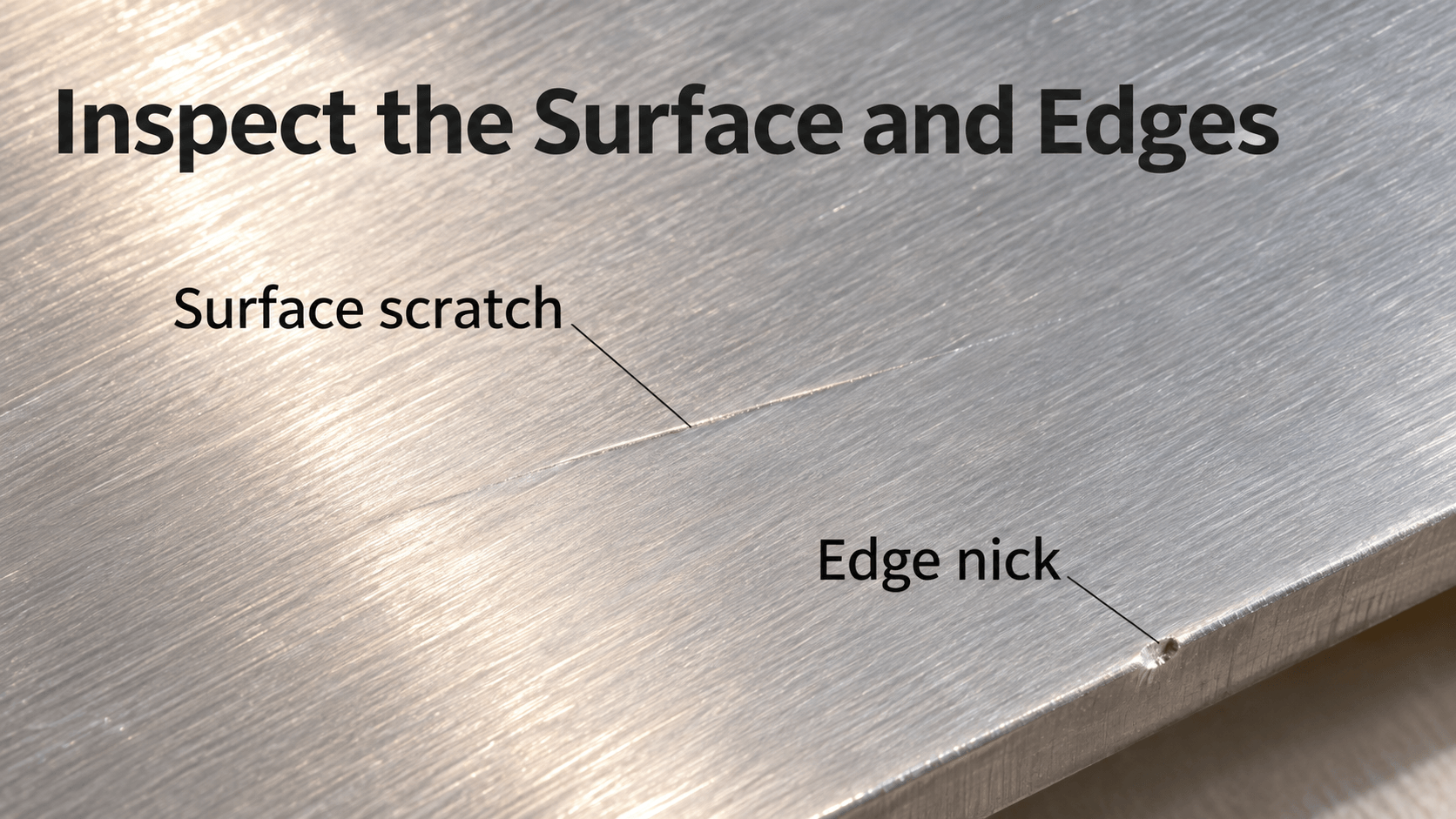
6. Inspect Surface Quality and Edge Condition

Surface quality is another important part of marine aluminum plate inspection. Even when alloy identification and dimensions are correct, visible surface defects may affect cutting, welding, coating, forming and final fabrication.

Inspection should be performed under sufficient lighting, with particular attention to the plate surface, edges and corners.

Marine aluminum plate surface inspection showing a surface scratch and edge nick
Surface and edge inspection helps identify visible scratches, edge damage and other conditions requiring evaluation.

Common Surface Defects to Check

  • Deep scratches: Check whether scratches exceed the agreed surface acceptance requirements.
  • Dents: Look for impact marks caused by handling or transportation.
  • Surface pits: Inspect localized surface irregularities or pitting.
  • Oxidation stains: Check for unusual discoloration or signs of corrosion.
  • Rolling marks: Evaluate whether the surface condition meets the specified finish.
  • Cracks: Check visible surface or edge cracks.
  • Delamination: Look for signs of separation or material discontinuity.
  • Contamination: Check for oil, dirt or foreign material on the surface.

Edge and Corner Inspection

Plate edges should be checked for cracks, excessive burrs, mechanical damage, deformation and cutting defects. For customized aluminum plate, edge condition can affect the next cutting and fabrication processes.

Not every visible mark automatically makes an aluminum plate unacceptable. Final acceptance should follow the agreed surface finish requirements, product standard and inspection criteria.

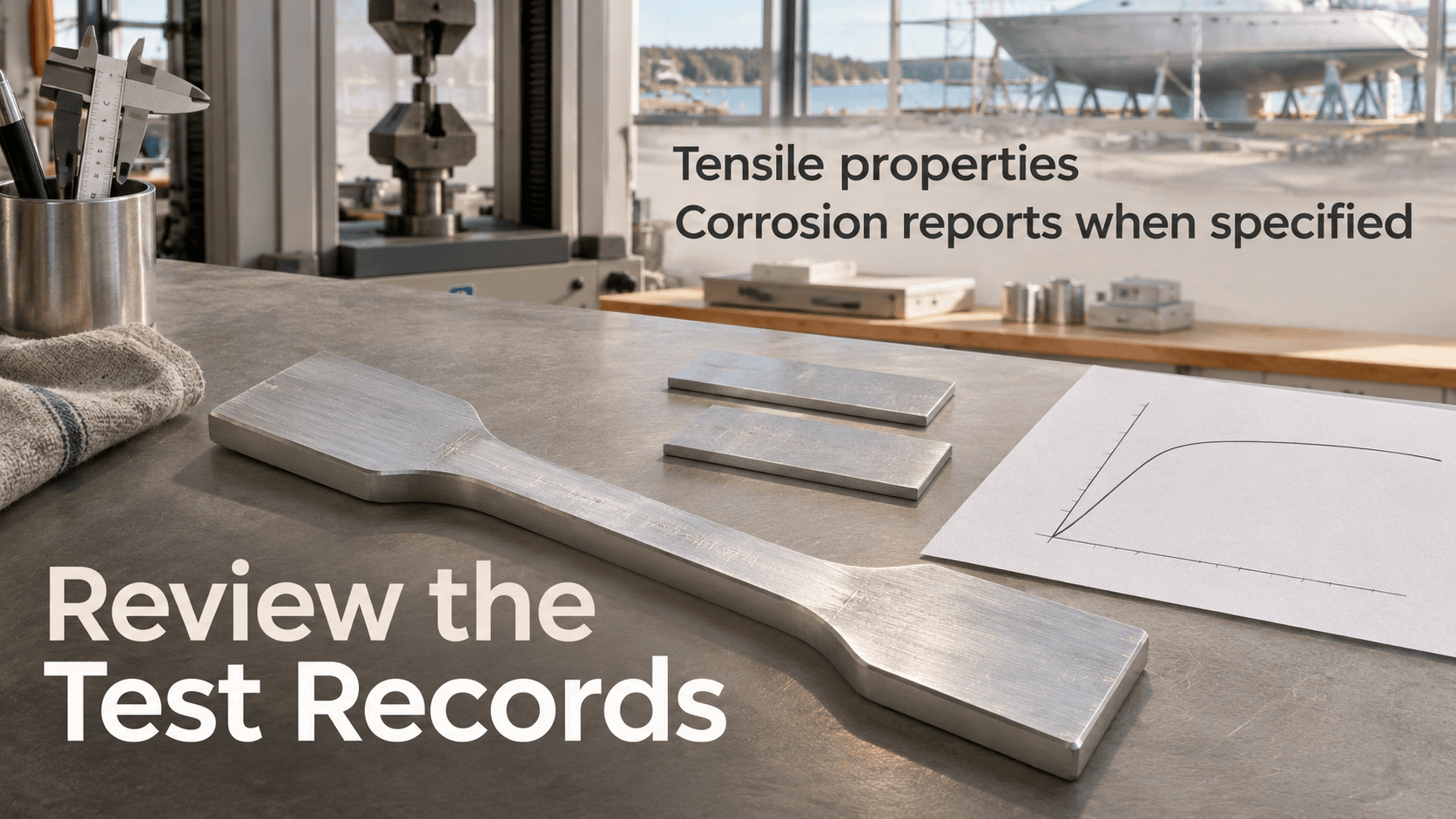
7. Verify Mechanical Properties and Corrosion Test Reports

Marine aluminum plate must meet the mechanical and corrosion performance requirements specified for its intended application. Visual inspection cannot establish these properties. Buyers should review the actual material test results and additional inspection reports where required.

Marine aluminum alloy mechanical testing and tensile property inspection records
Illustrative materials testing scene. Actual acceptance must be based on the applicable test reports and material specification.

7.1 Mechanical Property Inspection

The main mechanical properties buyers should review include:

  • Tensile Strength: The maximum tensile stress recorded during the tensile test.
  • Yield Strength: The stress associated with the specified yield criterion.
  • Elongation: The percentage increase in gauge length after fracture, determined according to the applicable test method.
  • Test Direction: The direction of the test specimen where specified.

Actual results should be compared with the requirements for the exact alloy, temper, thickness and test direction. Generic online property tables should not replace the applicable material standard or purchase specification.

7.2 ASTM G66 Exfoliation Corrosion Test

ASTM G66 is the ASSET test, a visual assessment method for evaluating exfoliation corrosion susceptibility in applicable 5XXX series aluminum alloys.

Exfoliation corrosion is a form of corrosion that can develop along grain boundaries and cause layers of material to separate or lift. It is particularly relevant when evaluating certain aluminum-magnesium alloys intended for demanding marine environments.

Buyers should review the relevant test documentation when exfoliation corrosion testing is required by the material specification or project contract.

7.3 ASTM G67 Intergranular Corrosion Test

ASTM G67 is known as the Nitric Acid Mass Loss Test, or NAMLT. It evaluates intergranular corrosion susceptibility by measuring material mass loss after exposure to a specified nitric acid environment.

The test is used for applicable wrought 5XXX series aluminum alloys. The actual test conditions, specimen preparation and acceptance requirements must follow the applicable standard.

ASTM G66 vs ASTM G67 Comparison

Comparison ASTM G66 ASTM G67
Test NameASSET TestNAMLT Test
Main EvaluationExfoliation corrosion susceptibilityIntergranular corrosion susceptibility
Evaluation MethodVisual assessment after specified exposureMass loss after nitric acid exposure
Material ScopeApplicable wrought 5XXX series alloysApplicable wrought 5XXX series alloys
Inspection PurposeEvaluate exfoliation corrosion behaviorEvaluate intergranular corrosion behavior

These two test methods evaluate different corrosion characteristics and cannot replace each other. The required tests and acceptance criteria must be determined by the applicable product standard and purchase agreement.

8. Understand ASTM B928 and ASTM B209

One common purchasing mistake is treating ASTM B928 and ASTM B209 as interchangeable standards. Although both relate to aluminum sheet and plate products, their scope and requirements are different.

Standard Main Scope Buyer Consideration
ASTM B928/B928M High magnesium aluminum alloy products intended for marine service and similar environments Verify the covered alloy-temper combination, dimensions and corrosion-related requirements
ASTM B209/B209M General aluminum and aluminum-alloy sheet and plate Verify the alloy, temper, product form and applicable mechanical requirements

ASTM B209/B209M specifically directs users to ASTM B928/B928M for certain 5XXX-H116 and 5XXX-H321 aluminum alloys containing at least 3% nominal magnesium and intended for marine service and similar environments.

Therefore, buyers should confirm the intended application and required standard before placing an order. A supplier should not claim ASTM B928 compliance solely because the product is made from 5083 or 5086 aluminum.

9. Arrange Third-Party Pre-Shipment Inspection

For large orders, shipbuilding projects and materials with strict documentation requirements, buyers may arrange independent third-party inspection before shipment.

A third-party inspector can check the material against the purchase order and agreed inspection plan. The inspection scope should be confirmed before the inspector visits the factory or warehouse.

Recommended Third-Party Inspection Scope

Inspection Area Inspection Activities
Material IdentificationVerify alloy, temper and plate markings
TraceabilityMatch material identification with MTC
DimensionsMeasure thickness, width and length
Surface QualityInspect scratches, dents and other visible defects
Mechanical PropertiesReview required mechanical test results
Corrosion TestingReview applicable corrosion test documentation
QuantityConfirm plate count and total weight
PackagingCheck protective materials and shipping marks

If the project requires classification society approval from organizations such as ABS, DNV, CCS, LR or BV, buyers should confirm the specific approval scope and documentation separately. ASTM material compliance does not automatically mean classification society approval.

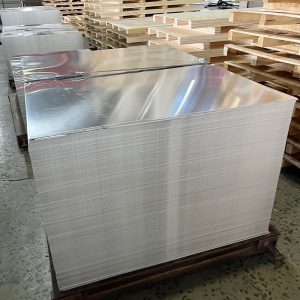
10. Check Export Packaging Before Shipment

Proper packaging is important for protecting marine aluminum plate during handling, storage and international transportation. Large aluminum plates may be exposed to lifting operations, stacking pressure, vibration and moisture during transportation.

Suitable export packaging should protect the surface, edges and corners while keeping the material identification visible and traceable.

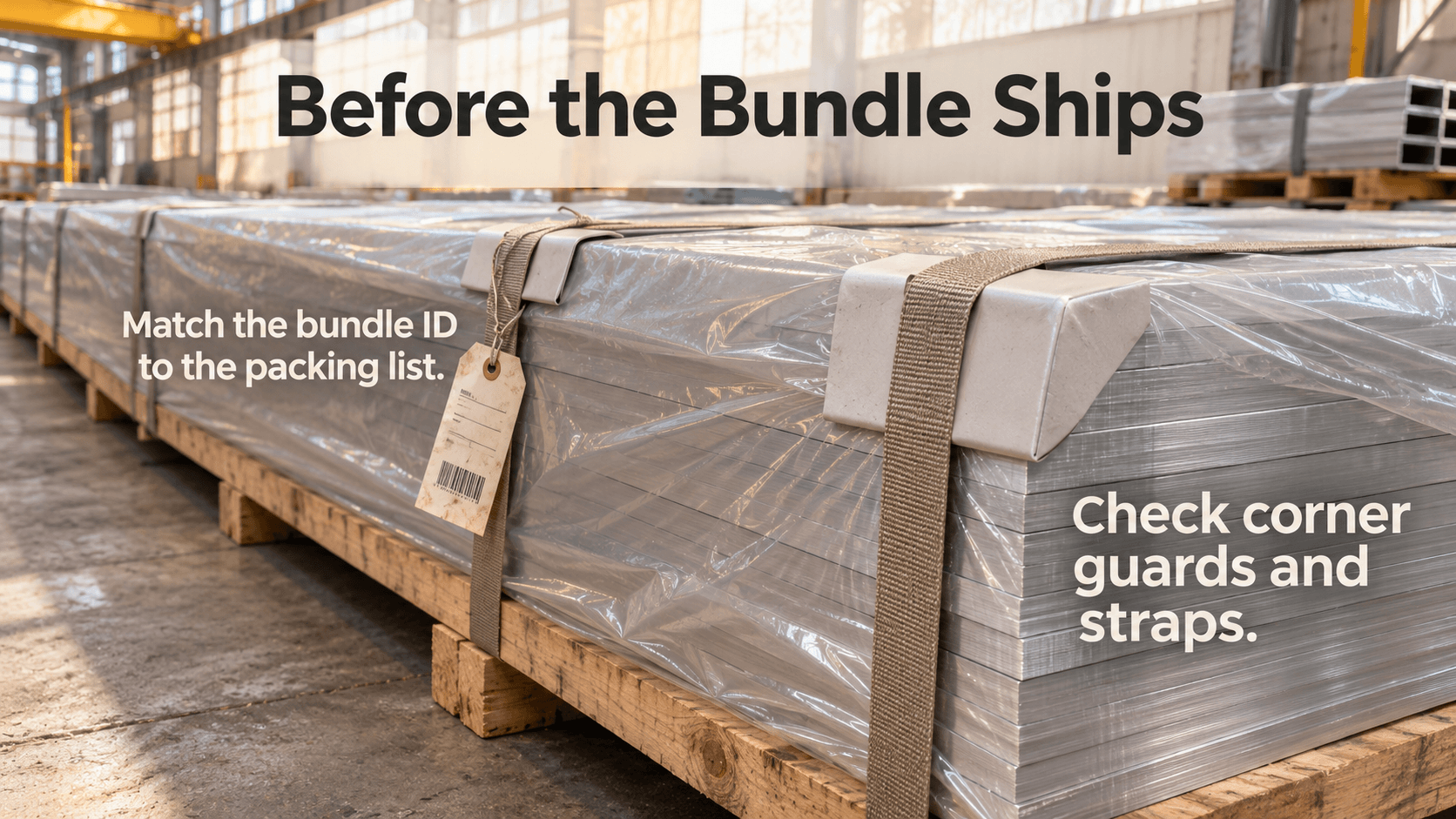
Marine aluminum plate export packaging inspection with protective film wooden pallets corner guards and straps
Check protective film, edge guards, wooden supports, strapping and bundle identification before shipment.

Recommended Export Packaging Materials

  • Protective Film: Helps reduce scratches and surface contamination during handling.
  • Interleaving Material: Helps separate individual plates where required.
  • Edge Protectors: Protect plate edges and corners from impact damage.
  • Wooden Pallets or Crates: Provide suitable support during storage and transportation.
  • Strapping: Keeps the aluminum plate bundle securely fastened.
  • Moisture Protection: Helps protect the material from unsuitable moisture exposure during transportation.

Shipping Mark Information

Before shipment, verify that the shipping marks are consistent with the packing list and other shipping documents.

Shipping Mark Purpose
Product NameIdentify the aluminum product
Alloy and TemperIdentify material grade and condition
DimensionsIdentify thickness, width and length
Bundle NumberSupport material traceability
Net WeightIdentify the material weight
Gross WeightIdentify total packed weight
Purchase OrderConnect the shipment with the order

For international shipments, wooden packaging should also comply with the applicable destination-country import requirements, including ISPM 15 where applicable.

11. Marine Aluminum Plate Pre-Shipment Inspection Checklist

Before approving a marine aluminum plate shipment, buyers can use the following checklist to review the essential inspection points. It can also be shared with suppliers, quality inspectors and logistics teams.

No. Inspection Item What to Confirm
01Alloy5083 or 5086 as ordered
02TemperCorrect temper designation
03Material StandardApplicable standard confirmed
04Plate MarkingIdentification is clear and traceable
05MTCCertificate is available and consistent
06Chemical CompositionResults meet specified requirements
07Tensile StrengthActual result meets requirements
08Yield StrengthActual result meets requirements
09ElongationActual result meets requirements
10ThicknessWithin specified tolerance
11Width and LengthDimensions match the order
12Surface QualityNo unacceptable surface defects
13Edge ConditionNo unacceptable edge damage
14Corrosion TestRequired reports are available
15Packaging and Shipping MarksPackaging and documents are consistent

The checklist should be adapted to the applicable product standard, project specification and purchase contract. Items marked as required should be supported by actual inspection records or test documents.

12. Frequently Asked Questions About Marine Aluminum Plate Inspection

Q1. How Can I Check Whether 5083 Aluminum Plate Is Genuine?

Check the plate identification, alloy and temper markings, producer information and corresponding Mill Test Certificate. Compare the chemical composition and mechanical test results with the specified material standard. For marine structural applications, also verify the applicable corrosion testing requirements.

Q2. What Is the Difference Between 5083-H116 and 5083-H321?

H116 and H321 are different temper designations with specific processing and property requirements. Both are used in certain marine aluminum applications. The correct condition should be selected according to the engineering design, product specification, thickness and required certification.

Q3. Does Every 5083 or 5086 Aluminum Plate Meet ASTM B928?

No. ASTM B928/B928M covers specified high-magnesium aluminum alloy products and alloy-temper combinations intended for marine service and similar environments. Buyers must verify the exact product form, temper, thickness and standard requirements.

Q4. Is an MTC Enough for Marine Aluminum Plate Inspection?

An MTC is essential for material identification, traceability and reviewing chemical and mechanical properties. However, some projects require additional corrosion test reports, independent inspection records or classification documentation.

Q5. What Instruments Are Used to Measure Aluminum Plate Thickness?

A calibrated digital micrometer is commonly used for direct thickness measurement. Other suitable measuring instruments may be used depending on plate thickness, inspection conditions and the agreed procedure.

Q6. What Are ASTM G66 and ASTM G67 Used For?

ASTM G66 evaluates exfoliation corrosion susceptibility in applicable 5XXX series aluminum alloys. ASTM G67, also called the NAMLT test, evaluates intergranular corrosion susceptibility through mass loss after nitric acid exposure. They assess different corrosion characteristics.

Q7. Can I Arrange Third-Party Inspection Before Shipment?

Yes. Buyers can appoint an independent inspection company to verify alloy identification, dimensions, surface quality, material documents, test reports, quantity and export packaging before shipment. The inspection scope should be agreed in advance.

Q8. What Information Should I Provide When Requesting a Marine Aluminum Plate Quotation?

Provide the required alloy, temper, material standard, thickness, width, length, quantity, surface finish, certification requirements and corrosion test requirements. Drawings and project application details can also help the supplier evaluate the correct material.

13. Conclusion: Inspect Marine Aluminum Plate Before Shipment

Marine aluminum plate inspection is an important part of reliable international material procurement. For 5083 and 5086 aluminum plate, buyers should pay attention to alloy and temper identification, material traceability, MTC verification, dimensional accuracy, surface condition, mechanical properties, corrosion testing and export packaging.

A clear purchase specification and a structured pre-shipment inspection process can reduce material risks, prevent unnecessary disputes and improve confidence in the final shipment.

When sourcing marine aluminum plate, buyers should work with suppliers who can clearly communicate material specifications, provide the agreed documentation and coordinate inspection and export requirements.

Looking for 5083 or 5086 Marine Aluminum Plate?

Gengfei Steel supplies aluminum products for international buyers, including aluminum plate and marine-grade aluminum materials. If you are sourcing 5083 or 5086 aluminum plate for shipbuilding, yacht manufacturing, marine engineering or industrial fabrication, send us your required alloy, temper, dimensions and applicable standard.

Our team can discuss your material requirements and help you evaluate a suitable supply solution.

Contact Gengfei Steel for Marine Aluminum Plate Specifications and Quotation.

Explore our Aluminum Sheet and Plate Products to learn more about available aluminum grades and supply options.

Technical References

Technical note: This article provides general purchasing and inspection guidance. Always verify the latest applicable standard, engineering drawings, material certification and purchase contract before accepting marine aluminum plate.

Leave a Reply

Your email address will not be published. Required fields are marked *