
Welcome to Henan Gengfei Industrial Co., Ltd.
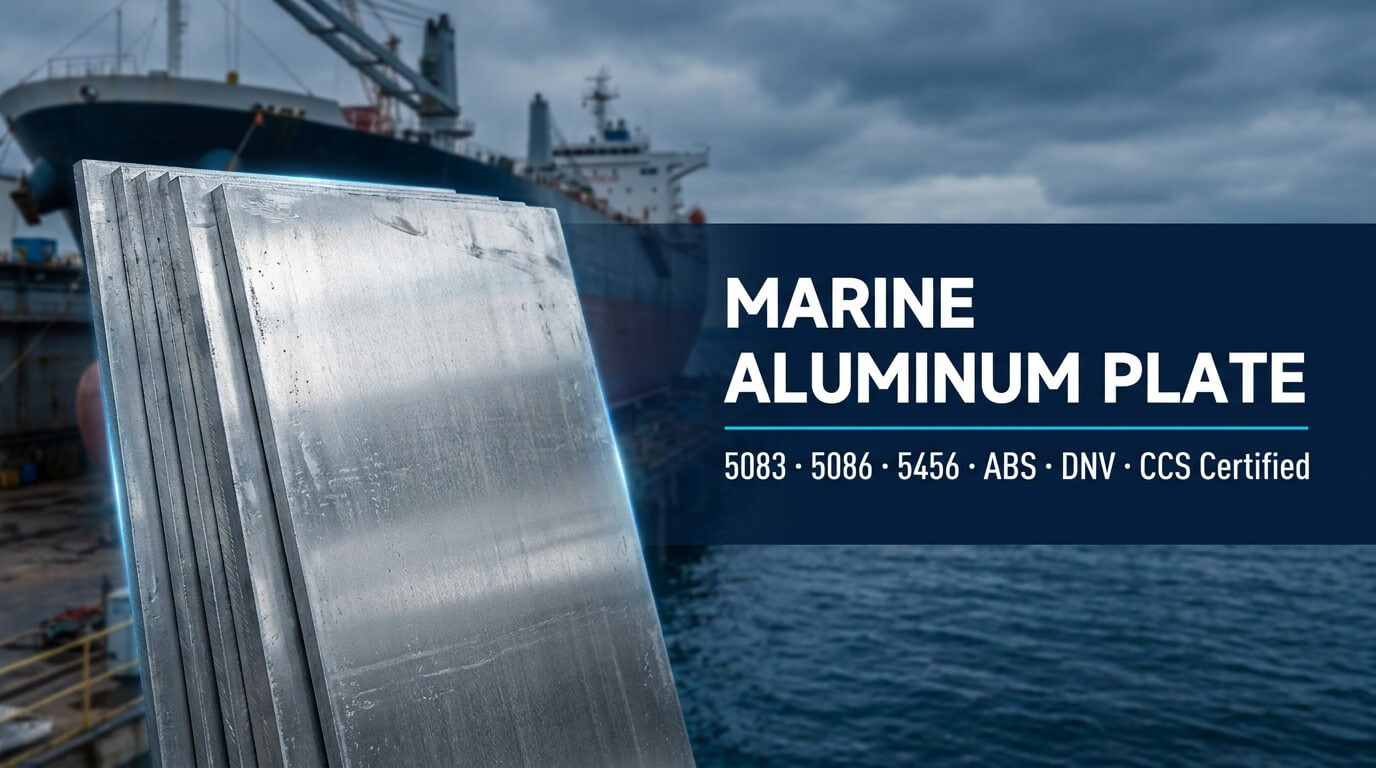
In modern shipbuilding and marine engineering, reducing structural weight while maintaining high load-bearing capacity and robust environmental resistance is critical to vessel performance. The development of marine aluminum plate technology has solved this challenge, establishing aluminum as a premier structural material alongside traditional shipbuilding steel.
With a density roughly one-third that of carbon steel, marine-grade aluminum alloys allow shipbuilders to construct larger, faster, and more fuel-efficient vessels. These high-performance alloys are engineered specifically to withstand the aggressive corrosive effects of marine atmospheres and saltwater, making them indispensable for hulls, decks, superstructures, and offshore support structures worldwide.
At GF Steel, we manufacture and globally distribute premium marine aluminum plates, ensuring complete compliance with the rigorous specifications defined by leading international classification societies. This technical guide outlines the metallurgy, material grades, mechanical performance, and quality control protocols of marine-grade aluminum.
| Alloy (UNS) | Silicon (Si) | Iron (Fe) | Copper (Cu) | Manganese (Mn) | Magnesium (Mg) | Chromium (Cr) | Zinc (Zn) | Titanium (Ti) | Al (Base) |
|---|---|---|---|---|---|---|---|---|---|
| 5083 (A95083) | ≤ 0.40 | ≤ 0.40 | ≤ 0.10 | 0.40 – 1.00 | 4.00 – 4.90 | 0.05 – 0.25 | ≤ 0.25 | ≤ 0.15 | Remainder |
| 5086 (A95086) | ≤ 0.40 | ≤ 0.50 | ≤ 0.10 | 0.20 – 0.70 | 3.50 – 4.50 | 0.05 – 0.25 | ≤ 0.25 | ≤ 0.15 | Remainder |
| 5456 (A95456) | ≤ 0.25 | ≤ 0.40 | ≤ 0.10 | 0.50 – 1.00 | 4.70 – 5.50 | 0.05 – 0.20 | ≤ 0.25 | ≤ 0.20 | Remainder |
| 5052 (A95052) | ≤ 0.25 | ≤ 0.40 | ≤ 0.10 | ≤ 0.10 | 2.20 – 2.80 | 0.15 – 0.35 | ≤ 0.10 |
Since 5000-series alloys are non-heat-treatable, they achieve their mechanical strength through strain hardening (cold working). To optimize these alloys for severe marine service, specific thermal-mechanical stabilization treatments are applied, resulting in the H116 and H321 tempers.
Under continuous exposure to warm marine temperatures (above 65°C), high-magnesium alloys (with >3.0% Mg>3.0% Mg) can experience magnesium precipitation at the grain boundaries, forming a continuous network of Mg5Al8Mg5Al8 (beta-phase). This phase is highly anodic compared to the aluminum matrix, rendering the alloy vulnerable to Intergranular Corrosion (IGC) and Stress Corrosion Cracking (SCC).
Anodizing and stabilization processes are engineered to ensure that the magnesium-aluminum intermetallic precipitates are distributed uniformly throughout the grains as isolated particles, rather than forming a continuous network at grain boundaries. This temper is highly resistant to exfoliation and IGC.
The plate is slightly cold-worked and then stabilized by a low-temperature thermal treatment to control the precipitation behavior, producing a material with predictable mechanical limits and excellent resistance to SCC under continuous loading.
Both H116 and H321 tempers are fully approved by global marine societies and are mandatory for high-magnesium structural plating in contact with seawater.
The structural design of marine hulls requires precise, predictable engineering minimums to withstand continuous wave impact, hydrodynamic pressure, and torsion.
| Alloy & Temper | Plate Thickness Range | Tensile Strength UTS (MPa) | Yield Strength 0.2% (MPa) | Elongation (%) | Brinell Hardness (HB) |
|---|---|---|---|---|---|
| 5083-H116 | 3 mm – 50 mm | ≥ 275 | ≥ 215 | ≥ 10% | ~85 |
| 5083-H321 | 3 mm – 50 mm | ≥ 275 | ≥ 215 | ≥ 10% | ~85 |
| 5086-H116 | 3 mm – 50 mm | ≥ 240 | ≥ 195 | ≥ 10% | ~75 |
| 5086-H321 | 3 mm – 50 mm | ≥ 240 | ≥ 195 | ≥ 10% | ~75 |
| 5456-H116 | 3 mm – 40 mm | ≥ 315 | ≥ 230 | ≥ 10% | ~90 |
| 5052-H32 | 3 mm – 50 mm | ≥ 215 | ≥ 160 | ≥ 8% | ~60 |


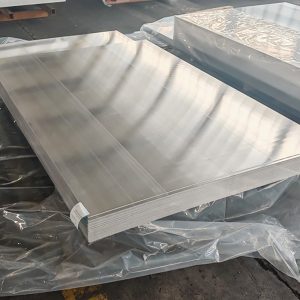

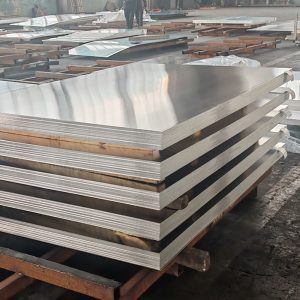
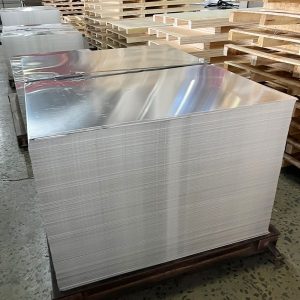
Upon exposure to air or water, aluminum spontaneously forms a micro-thin, chemically stable layer of aluminum oxide (Al2O3Al2O3). In marine-grade alloys, the addition of magnesium and chromium further stabilizes this barrier, preventing aggressive chloride ions in seawater from initiating deep pitting or uniform oxidation, drastically reducing drydock maintenance costs.
5000-series alloys possess excellent weldability under standard gas metal arc welding (MIG) and gas tungsten arc welding (TIG) processes. Unlike steel, welded joints in 5083 or 5086 alloys retain up to 90% to 100% of the annealed parent metal’s tensile strength, eliminating the need for complex post-weld heat treatment.
While carbon steels exhibit ductile-to-brittle transition temperatures (DBTT) and become highly brittle under cold conditions, marine aluminum alloys exhibit excellent cryogenic performance. As temperature drops, the tensile strength and elongation of 5083 aluminum actually increase, making it the ideal material for LNG (Liquefied Natural Gas) carriers and polar vessels.
In the maritime industry, safety is paramount. Every structural marine aluminum plate supplied by GF Steel undergoes extensive, multi-stage testing to guarantee performance in critical operations.
Our manufacturing lines are fully audited and certified by leading global classification societies:
Table of Contents
×