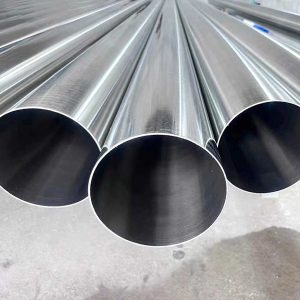
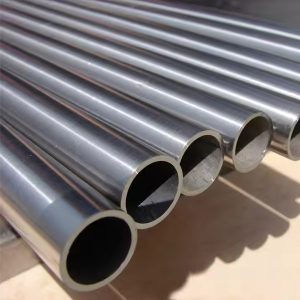
In the global industrial landscape, the stainless steel tube is not merely a component; it is a critical engineering solution for fluid transport and structural integrity under extreme conditions. Whether resisting corrosive chemicals, enduring cryogenic temperatures, or maintaining structural stability at 1000°C+, stainless steel tubing provides the reliability required for high-stakes infrastructure.
At GengFei Steel, we bridge the gap between advanced metallurgy and practical application. This guide details the technical nuances of stainless steel tubing to assist engineers and procurement officers in making data-driven decisions.
Manufacturing Methodology: Seamless vs. Welded
The choice between seamless and welded tubing is determined by the pressure rating, cost-efficiency, and application sensitivity.
Table 1: Comparative Analysis of Manufacturing Methods
Feature
Seamless Stainless Steel Tube
Welded Stainless Steel Tube
Manufacturing Process
Hot Extrusion / Cold Drawing / Cold Pilgering
Cold Rolling Coil → Welding (TIG/Laser) → Sizing
Pressure Resistance
Extremely High (Uniform wall structure)
Moderate to High (Limited by weld seam strength)
Dimensional Precision
Average (Requires cold-finishing for precision)
Excellent (Precise wall thickness and concentricity)
Internal Surface
Rougher (unless honed or electro-polished)
Smooth (Bead-removed technology available)
Cost Efficiency
Higher Cost (Labor and energy intensive)
Lower Cost (High automation, less waste)
Typical Use
High-pressure boilers, hydraulic lines, Oil & Gas
Construction, heat exchangers, food processing
Material Grades and Chemical Composition
Selecting the correct chemical grade is paramount to preventing premature material failure (pitting, crevice corrosion, or stress corrosion cracking).
Table 2: Chemical Composition (Typical Weight %)
Grade (UNS)
Cr (Chromium)
Ni (Nickel)
Mo (Molybdenum)
C (Carbon)
Other Elements
304 (S30400)
18.0 – 20.0
8.0 – 11.0
–
≤ 0.08
Mn, Si, P, S
304L (S30403)
18.0 – 20.0
8.0 – 12.0
–
≤ 0.03
Low carbon for welding
316 (S31600)
16.0 – 18.0
10.0 – 14.0
2.0 – 3.0
≤ 0.08
Improved pitting resistance
316L (S31603)
16.0 – 18.0
10.0 – 14.0
2.0 – 3.0
≤ 0.03
Ideal for marine/pharmacy
310S (S31008)
24.0 – 26.0
19.0 – 22.0
–
≤ 0.08
High-temp oxidation resistance
2205 (S32205)
22.0 – 23.0
4.5 – 6.5
3.0 – 3.5
≤ 0.03
Duplex structure (High strength)
Mechanical Performance Data
The structural integrity of a project depends on the tensile and yield capacity of the tubing.
Table 5: Standard Dimensional Tolerances (Example for ASTM A312)
Outside Diameter (OD)
OD Tolerance
Wall Thickness (WT) Tolerance
1/8″ – 1 1/2″
+0.40 mm / -0.40 mm
± 12.5%
1 1/2″ – 4″
+0.79 mm / -0.79 mm
± 12.5%
4″ – 8″
+1.59 mm / -0.79 mm
± 12.5%
8″ – 12″
+2.38 mm / -0.79 mm
± 12.5%
Surface Finishes and Technical Treatment
Surface quality is directly linked to the material’s passive layer stability and ease of sterilization.
Pickling & Annealing (Solution Treatment): Relieves internal stresses and restores corrosion resistance after cold working.
Bright Annealing (BA): Processed in a hydrogen-rich atmosphere to achieve a reflective, smooth surface without oxidation.
Mechanical Polishing:
Mechanical Polishing:
No.4 Finish (Brushed): 150-180 grit, common in architectural designs.
No.8 Finish (Mirror): Highly reflective, used in aesthetic and high-purity systems.
Electro-Polishing (EP): An electrochemical process that removes surface ions, creating the ultimate smooth, non-contaminating surface for the semiconductor and biotech industries.
Comprehensive Quality Inspection (NDT & DT)
Every stainless steel tube from GengFei Steel undergoes a rigorous QC cycle:
PMI (Positive Material Identification): Handheld XRF testing to verify chemical elements.
Hydrostatic Pressure Testing: Ensuring no leaks or deformations under 1.5x design pressure.
Ultrasonic Testing (UT): Detecting internal cracks or inclusions within the tube wall.
Eddy Current Testing: Fast detection of surface and near-surface irregularities.
Flaring & Flattening Tests: Verifying the ductility and weld seam integrity.
Strategic Applications by Sector
Energy & Power: Condenser tubes, superheater coils, and nuclear power plant containment systems.
Petrochemical: High-temperature furnace tubes (310S/347H) and corrosive fluid transport (316L/Duplex).
Food & Pharma: Sanitary tubing (ASTM A270) with strict Ra (Roughness Average) control for Clean-In-Place (CIP) systems.
Aerospace: High-strength hydraulic lines and fuel injection systems (Grade 321/304).
Contact GengFei Steel: Your Global Supply Partner
GengFei Steel combines massive inventory with custom fabrication capabilities. Contact our engineering support team for material selection, technical drawings, or competitive global pricing.