Why Carbon Steel Reigns Supreme in the Oil and Gas Industry
The oil and gas industry is one of the most demanding sectors when it comes to material selection for pipelines, equipment, and infrastructure. The harsh environment, high pressure, corrosive substances, and economic considerations necessitate the use of materials that are reliable, durable, and cost-effective. Among various materials, carbon steel has established itself as the dominant choice, owing to its exceptional properties and versatility. This article explores the reasons behind the supremacy of carbon steel in the oil and gas industry, emphasizing its physical, mechanical, and economic advantages, along with applications and future prospects.
Introduction
The oil and gas industry operates in a challenging environment characterized by extreme temperatures, high pressures, and corrosive substances such as hydrogen sulfide, carbon dioxide, and seawater. These conditions demand materials that can withstand such harsh environments without compromising safety, integrity, or cost.
Carbon steel’s favorable properties, combined with technological advancements, have made it the material of choice for a wide range of applications, from drilling pipes to refining equipment. Its affordability, ease of fabrication, and proven performance have cemented its position in the industry.
Physical and Mechanical Properties of Carbon Steel
Composition and Types
Carbon steel is primarily composed of iron with a carbon content ranging from 0.05% to 2.0%. Its properties vary based on carbon content and the presence of alloying elements. The main categories include:
Type of Carbon Steel
Carbon Content
Typical Use Cases
Low Carbon Steel ( Mild Steel)
0.05% – 0.25%
Pipelines, structural components
Medium Carbon Steel
0.30% – 0.60%
Drilling pipes, pressure vessels
High Carbon Steel
0.60% – 2.0%
Cutting tools, wear-resistant parts
Mechanical Strength
Property
Typical Values
Significance
Tensile Strength
370 – 700 MPa
Resistance to breaking under tension
Yield Strength
250 – 500 MPa
Onset of permanent deformation
Ductility
20% – 30% elongation
Ability to deform without fracturing
Toughness
High
Resistance to crack propagation under impact
Corrosion Resistance
While carbon steel is susceptible to corrosion, especially in saline or acidic environments, proper coatings, cathodic protection, and alloying can significantly enhance its durability.
Advantages of Carbon Steel in the Oil and Gas Industry
1. Cost-Effectiveness
Aspect
Details
Raw Material Cost
Lower compared to stainless steel and special alloys
Manufacturing & Fabrication
Well-established processes, cost-efficient production
Maintenance & Repair
Easier and more affordable to repair or replace
2. Mechanical Properties
Carbon steel exhibits excellent strength-to-weight ratio, high toughness, and ductility, making it suitable for high-pressure applications.
3. Fabrication and Welding
The material’s excellent weldability simplifies fabrication processes such as bending, welding, and forming, reducing project time and costs.
4. Versatility
Carbon steel can be tailored through heat treatment and alloying to meet specific requirements, making it suitable for various applications within the industry.
5. Proven Track Record
Decades of successful application in pipelines, drilling equipment, and processing facilities establish confidence in its performance.
Applications of Carbon Steel in the Oil and Gas Sector
Drilling Equipment
Equipment Type
Description
Drill Pipes
Transmit torque, withstand high pressures and torsion
Casing and Tubing
Provide structural support and conduit for fluids
Drill Collars
Add weight and stability during drilling
Pipelines
Pipeline Type
Usage
Onshore Pipelines
Transport oil and gas across land
Offshore Pipelines
Undersea transportation, with corrosion protection measures
Processing and Refining Equipment
Equipment
Function
Pressure Vessels
Contain high-pressure fluids
Heat Exchangers
Transfer heat efficiently, resistant to thermal stresses
Storage Tanks
Store crude oil, refined products, and chemicals
Structural Components
Structure
Role
Platforms and Supports
Structural integrity in harsh environments
Valves and Fittings
Control flow of fluids, with high strength requirements
Corrosion Control and Material Enhancements
Despite its advantages, carbon steel’s susceptibility to corrosion necessitates protective measures:
Corrosion Control Method
Description
Coatings
Protective paints, epoxy coatings to prevent contact with corrosive agents
Cathodic Protection
Sacrificial anodes or impressed current systems to reduce corrosion rate
Alloying Elements
Addition of elements like nickel, chromium (less common due to cost) to improve corrosion resistance
Table: Common Protective Coatings for Carbon Steel Pipelines
Coating Type
Advantages
Limitations
Epoxy Coatings
Excellent adhesion, chemical resistance
Requires surface preparation
Polyurethane Coatings
UV resistant, flexible
Costlier than other coatings
Asphalt Coatings
Cost-effective, simple application
Less durable in harsh environments
Economic Considerations
Total Cost of Ownership
Factors
Impact
Material Cost
Significantly lower than stainless or alloy steels
Fabrication and Installation
Faster, more straightforward, less labor-intensive
Maintenance and Repairs
Easier to maintain, lower long-term costs
Lifecycle Durability
Properly protected, can last for decades in service
Comparative Cost Table
Material Type
Initial Cost (per ton)
Maintenance Cost
Durability
Suitability in Harsh Environments
Carbon Steel
Low
Moderate
High
Suitable with protective measures
Stainless Steel
High
Low
Very high
Excellent, but costly
Alloy Steel
Moderate to high
Moderate
High
Specialized applications
Challenges and Limitations
While carbon steel is highly advantageous, it has limitations:
Corrosion Susceptibility: Requires protective measures in aggressive environments.
Temperature Limitations: Not suitable for extremely high-temperature applications without modifications.
Hydrogen Embrittlement: Susceptible in certain conditions, affecting weld integrity.
These challenges are mitigated through appropriate design, protective coatings, and material treatment.
Future Trends and Innovations
The industry continues to innovate to enhance the performance of carbon steel:
Trend
Description
Advanced Coatings
Development of more durable and environmentally friendly coatings
Smart Materials
Integration of sensors for real-time corrosion monitoring
Hybrid Materials
Combining carbon steel with other materials for enhanced properties
Sustainable Practices
Recycling and eco-friendly manufacturing processes
FAQ: Carbon Steel in Oil & Gas Industries
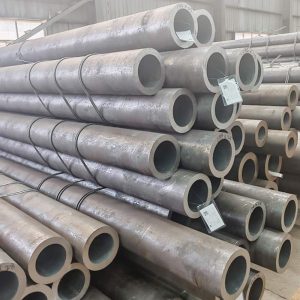
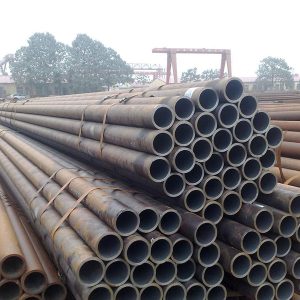
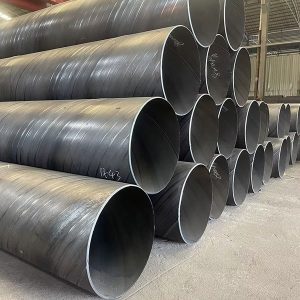
Q1: Why is carbon steel preferred over stainless steel in oil and gas? A1: While stainless steel offers better corrosion resistance, carbon steel pipes are more affordable and provide sufficient durability when coated or treated, making them more suitable for large-scale pipelines.
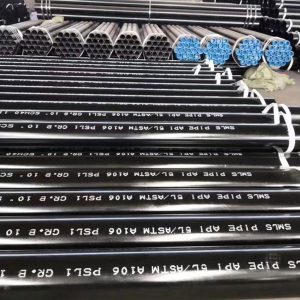
Q2: What standards govern carbon steel pipes in oil and gas? A2: The most common include ASTM A53, ASTM A106, ASTM A333, and API 5L, which ensure the pipes meet strict mechanical and safety requirements.
Q3: Can carbon steel withstand offshore environments? A3: Yes, but offshore pipelines typically use carbon steel with protective coatings to resist seawater corrosion.
Q4: Is carbon steel cost-effective for oil pipelines? A4: Absolutely. The cost-effectiveness of carbon steel pipes is one of the main reasons they are widely used in long-distance oil and gas transmission.
Conclusion
Carbon steel’s dominance in the oil and gas industry stems from its well-balanced combination of strength, ductility, cost-effectiveness, and proven performance. Its adaptability through various treatments and coatings allows it to meet the demanding conditions of oil and gas operations effectively. While challenges such as corrosion are addressed through protective methods, ongoing innovations promise to extend its applicability further.
In summary, the reliability, versatility, and economic advantages of carbon steel ensure its continued reign as the material of choice in the oil and gas industry for decades to come.
Contact Us
If you’re looking for a reliable carbon steel pipe supplier from China, Gengfei is ready to serve you. We combine competitive prices, fast production, and strict quality control to ensure your project’s success.