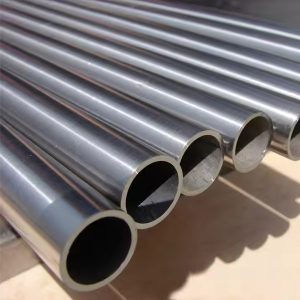
310S Stainless Steel Pipe/Tube

310S Stainless Steel is a highly alloyed austenitic stainless steel designed for extreme heat resistance. Its elevated chromium (25%) and nickel (20%) content provides outstanding oxidation resistance up to 1150°C (2100°F) and excellent strength in high-temperature service. This grade is the low-carbon version of 310, minimizing carbide precipitation during welding or prolonged high-temperature exposure, ensuring superior corrosion resistance.
    • Material Grade: UNS S31008, AISI 310S, EN 1.4845
    • Structure: Austenitic (non-magnetic)
    • Prime Strength: Unparalleled high-temperature oxidation & scaling resistance.
    • Environment Suitability: Resists sulfidation, carburization, and cyclic heating/cooling.
    • Formability & Weldability: Good formability and weldability using standard methods (TIG, MIG, SAW).
    • Certificated:ISO9001:2015, CE, ROHS

Gengfei Steel is an experienced steel supplier, providing the best prices and services.

WhatsApp

Description

What is the 310S Stainless Steel Pipe/Tube?

310S Stainless Steel (UNS S31008) is an austenitic heat-resistant stainless steel. It is the low-carbon version of Grade 310, designed for enhanced weldability and reduced susceptibility to sensitization and intergranular corrosion in high-temperature environments. This makes it an ideal choice for applications involving continuous high-temperature service where excellent oxidation and corrosion resistance are critical.

Composed of approximately 25% chromium and 20% nickel, 310S offers superior performance in highly oxidizing and moderately carburizing atmospheres. Its chemical composition contributes to its remarkable ability to withstand elevated temperatures up to (approximately ) in continuous service, provided reducing sulfur gases are not present. Even in intermittent service, it can endure temperatures up to (approximately ).


Technical Parameters of 310 Stainless Steel Pipe

1. Typical Chemical Composition (Weight %)

Element AISI 310S (min – max) EN 1.4845 (min – max)
Chromium 24.0 – 26.0 24.0 – 26.0
Nickel 19.0 – 22.0 19.0 – 22.0
Silicon 1.50 max 1.50 max
Manganese 2.00 max 2.00 max
Carbon 0.08 max 0.08 max
Phosphorus 0.045 max 0.045 max
Sulfur 0.030 max 0.015 max
Iron Balance Balance

2. Typical Mechanical Properties (Room Temperature)

Property Value (Annealed Condition)
Tensile Strength (UTS) ≥ 515 MPa (≥ 75 ksi)
Yield Strength (0.2% YS) ≥ 205 MPa (≥ 30 ksi)
Elongation (% in 50mm) ≥ 40%
Hardness (Rockwell B) ≤ 95 HRB
Modulus of Elasticity ~193 GPa (28 x 10^6 psi)

3. Common Specifications & Standards

  • ASTM: A312 (Seamless/Welded Pipe), A213 (Seamless Tube), A269 (Welded Tube), A789/A790 (General Service)

  • ASME: SA312, SA213, SA269, SA789/SA790

  • EN: 10216-5 (Seamless), 10217-7 (Welded)

  • DIN: 17456, 17458

4. Common Sizes & Tolerances

Parameter Typical Range (Example) Tolerance Standard (e.g., ASTM A312)
Outer Diameter 1/8″ to 24″+ ± 1% (or specific table values)
Wall Thickness 0.5mm to 30mm+ ± 10% (or specific table values)
Length Random, Double Random, Cut Length As specified per order
Note: Specific tolerances depend on manufacturing method (seamless vs welded), size, and the applicable standard. Custom sizes available.

Advantages of 310S Pipes/Tubes

  1. Exceptional Heat Resistance: Performs reliably in continuous service up to 1150°C (2100°F).

  2. Superior Oxidation & Scaling Resistance: Forms a stable, protective chromium oxide layer preventing material degradation.

  3. Excellent Creep Strength: Maintains structural integrity under high stress at elevated temperatures.

  4. Good Corrosion Resistance: Resists oxidation, sulfidation, and general corrosion in harsh environments.

  5. Low Carbon Content (0.08% max): Minimizes sensitization (carbide precipitation) during welding or high-temp use, preserving corrosion resistance.

  6. Durability & Long Service Life: Reduces downtime and replacement costs in demanding applications.

  7. Good Fabrication Properties: Can be readily formed, bent, and welded using standard techniques.


Applications of 310s Stainless Steel Tube

310S pipes/tubes are essential in industries requiring extreme heat resistance:

  • Heat Treatment Furnaces: Radiant tubes, muffles, retorts, baskets, conveyor systems.

  • Thermal Processing Equipment: Annealing, carburizing, and sintering furnaces.

  • Boiler Components: Superheaters, reheaters, heat exchangers in high-efficiency boilers.

  • Petrochemical & Refining: Catalytic reforming units, pyrolysis tubes, furnace internals.

  • Chemical Processing: Equipment handling hot corrosive gases or molten salts.

  • Power Generation: Gas turbine exhaust systems, burner components.

  • Aerospace: High-temperature engine exhaust components.

  • Glass & Ceramic Manufacturing: Kiln furniture, burner nozzles.

  • Food Processing: High-temperature ovens, dryers.

aluminum sheet application


Comparison of Stainless Steel Pipe/Tube Grades

Grade Corrosion Resistance Temperature Resistance Main Difference
304 Excellent for most environments Up to ~870°C (intermittent) General-purpose, most common
316 Superior (chloride resistance) Up to ~870°C Contains molybdenum for better pitting resistance
201 Moderate Slightly lower Lower nickel, more economical
321 Excellent, stabilized Up to ~870°C Titanium stabilized to resist carbide precipitation
310 Excellent in high-heat Up to 1150°C High chromium/nickel for heat resistance

Why Choose 310S?

  • When Temperature is Critical: For applications consistently exceeding 1000°C (1800°F), 310S is often the only viable stainless steel option due to its unmatched oxidation resistance and strength retention.

  • For Longevity in Extreme Heat: Its superior resistance to scaling, carburization, and thermal cycling translates to longer component life and reduced maintenance costs in furnace applications.

  • Stability: The low carbon content ensures stability after welding or prolonged high-temp exposure, avoiding sensitization issues inherent in unstabilized grades like 304.


Choosing the Right Grade

  • 310S is ideal for high-temperature oxidation and corrosive environments (e.g., furnace parts, chemical reactors).
  • 304/316 are better suited for general corrosion resistance and lower-temperature applications.
  • 321 is preferred where weldability and stress-corrosion resistance are critical (e.g., nuclear reactors).

Reviews

There are no reviews yet.


Be the first to review “310S Stainless Steel Pipe/Tube”

📧 Email: [email protected]
📞 WhatsApp / Phone: +86 191 3986 3252
🌐 Website: www.gengfeisteel.com