
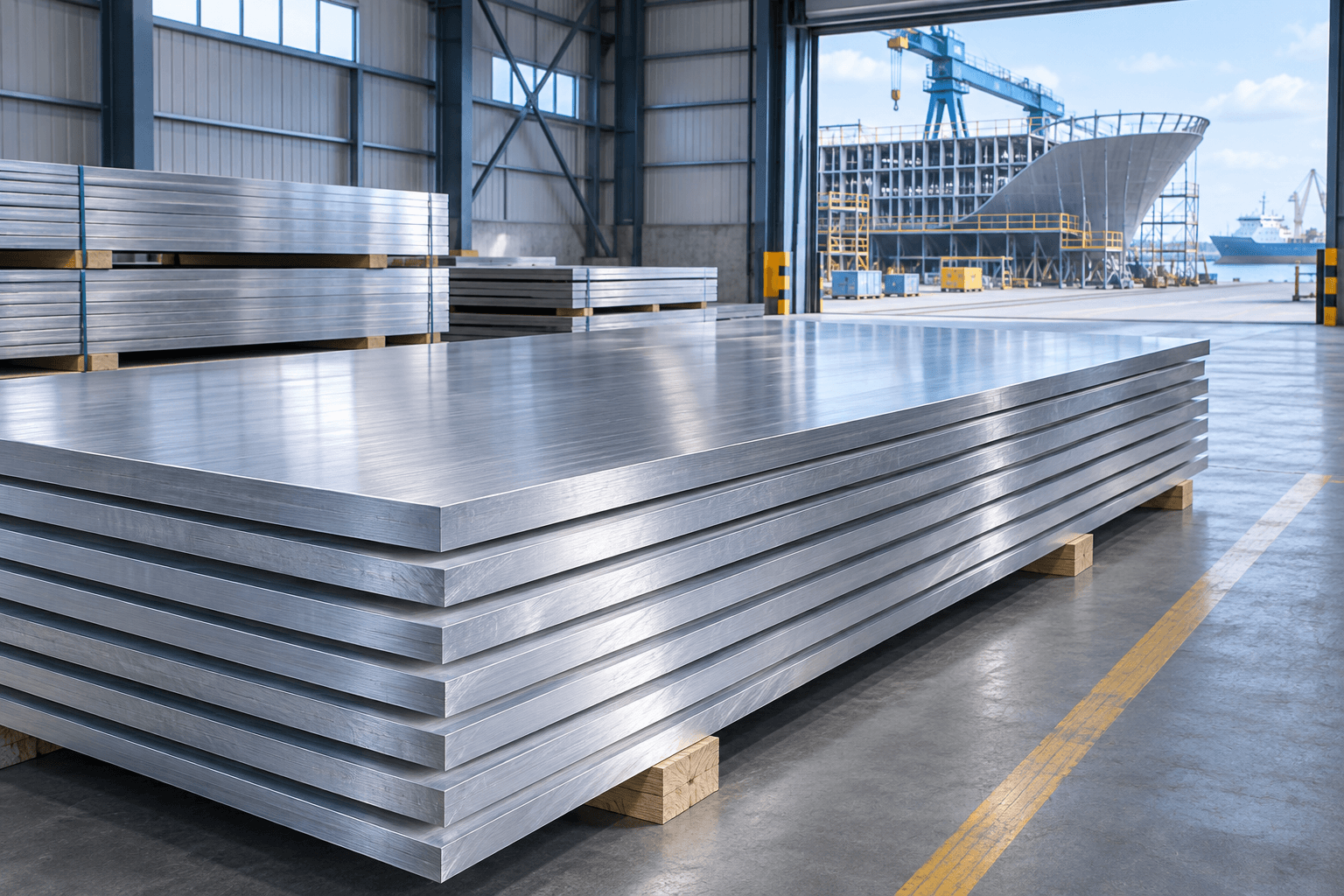
Why ASTM Standards Matter When Buying Marine Aluminum Plate
Choosing the right marine aluminum plate involves more than selecting an alloy such as 5083 or 5086. Buyers also need to understand the applicable material standard, temper, corrosion resistance requirements, mechanical properties, and inspection documentation.
Two commonly referenced specifications are ASTM B928/B928M and ASTM B209/B209M. Although both cover aluminum products, they serve different purposes. ASTM B209 is a general specification for aluminum and aluminum-alloy sheet and plate, while ASTM B928 is specifically designed for high-magnesium aluminum-alloy products for marine service and similar environments.
Understanding ASTM B928 vs ASTM B209 helps shipbuilders, yacht manufacturers, marine contractors, aluminum distributors, and material importers prepare accurate purchasing specifications and reduce the risk of receiving materials that do not meet project requirements.
This guide explains the differences between the two standards, the role of 5083 and 5086 aluminum alloys, the importance of corrosion testing, and the documents buyers should request before placing an order.
ASTM B928 vs ASTM B209: Quick Comparison
The main difference between ASTM B928 and ASTM B209 is their intended application and additional corrosion performance requirements.
| Comparison Item | АСТМ Б928/Б928М | АСТМ Б209/Б209М |
|---|---|---|
| Основная цель | High-magnesium aluminum products for marine service | General aluminum and aluminum-alloy sheet and plate |
| Typical Product Forms | Sheet, coil, plate and specified extruded products | Sheet, coiled sheet and plate |
| Material Scope | Specified high-magnesium aluminum alloys and tempers | A wider range of aluminum alloys and tempers |
| Морские применения | Marine hull construction and specified seawater-exposed structures | General industrial and suitable marine applications |
| Corrosion Requirements | Additional corrosion resistance requirements for applicable products | Does not include the same B928-specific corrosion requirements |
| Common Marine Alloys | Specified 5xxx-series marine alloy-tempers | Various listed aluminum alloys and tempers |
| Quality Documentation | Material certification and applicable corrosion test documentation | Material certification and applicable mechanical and chemical test documentation |
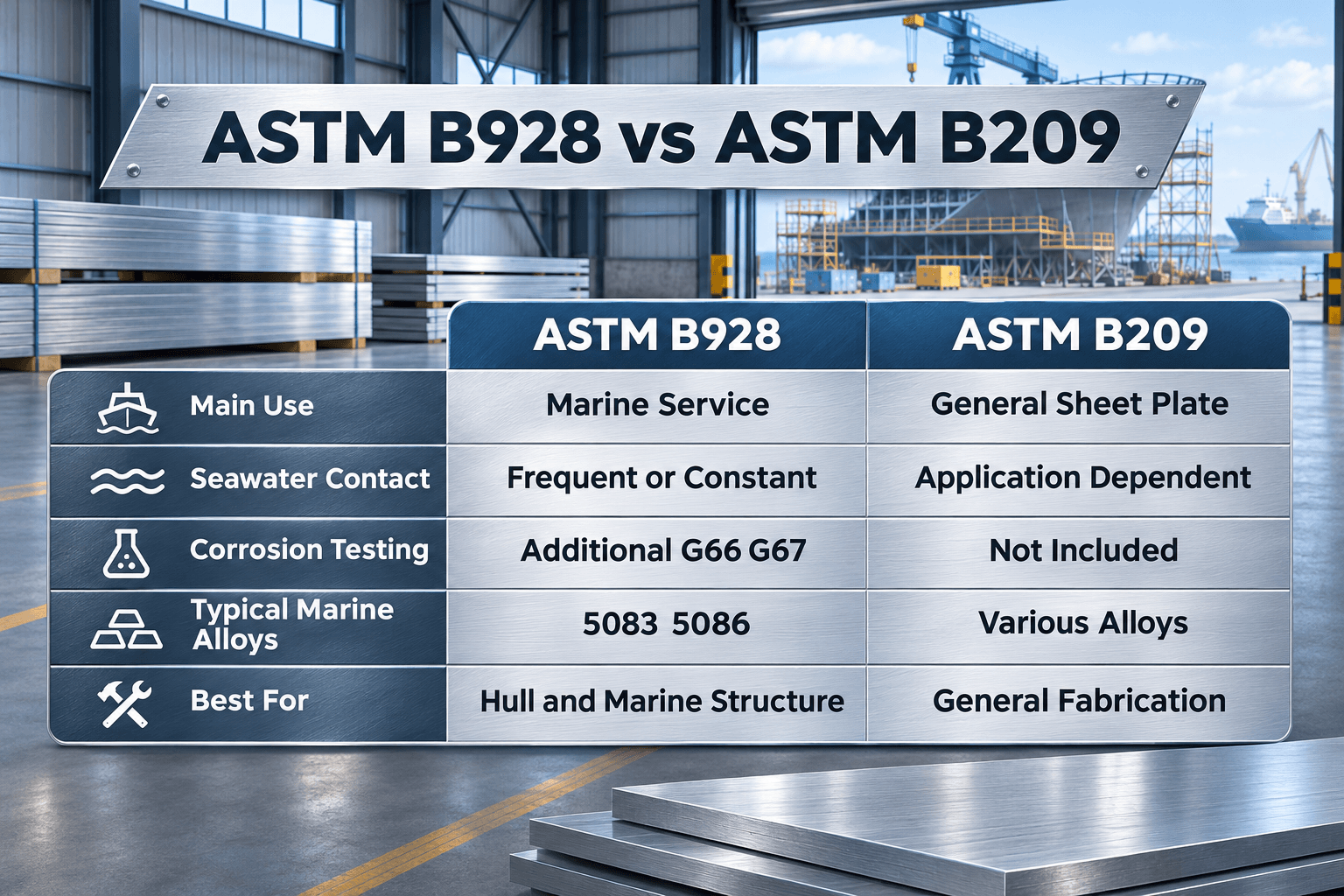
Важный: ASTM B928 is not simply a higher-grade version of ASTM B209. The two specifications address different product requirements. The correct choice depends on the alloy, temper, operating environment, engineering design, and purchase contract.
1. What Is ASTM B209 for Aluminum Sheet and Plate?
ASTM B209/B209M is the Standard Specification for Aluminum and Aluminum-Alloy Sheet and Plate. It covers flat aluminum sheet, coiled sheet, and plate in specified alloys and tempers.
The standard provides requirements relating to chemical composition, mechanical properties, product dimensions, finishes, and other material characteristics.
1.1 Main Characteristics of ASTM B209
ASTM B209 is widely used in industrial aluminum sourcing because it covers a broad range of aluminum alloy products.
- Aluminum sheet and plate for industrial manufacturing.
- Flat aluminum products in specified alloy and temper combinations.
- Coiled aluminum sheet for further processing.
- Products supplied in applicable mill and other specified finishes.
- Material with specified chemical composition and mechanical properties.
Depending on the application, buyers may encounter aluminum grades such as 1050, 1060, 1100, 3003, 5052, 5083, and 6061. However, not every grade and temper is covered by every edition of the standard. The applicable tables and product requirements must be checked before ordering.
1.2 Can ASTM B209 Aluminum Be Used in Marine Applications?
Yes. Some aluminum alloy-tempers supplied under ASTM B209 may be suitable for marine and similar environments.
However, suitability depends on the specific material and its service conditions. A general aluminum sheet specification does not automatically establish the additional corrosion performance verification required by ASTM B928.
ASTM B209 also contains provisions referring certain 5xxx-series H116 and H321 products containing 3% or more nominal magnesium to ASTM B928 when intended for marine service and similar environments.
This distinction is important when purchasing 5083 or 5086 marine aluminum plate. Buyers should confirm the exact specification and temper instead of relying only on the alloy designation.
2. What Is ASTM B928 for Marine Aluminum Plate?
ASTM B928/B928M is the Standard Specification for High Magnesium Aluminum-Alloy Products for Marine Service and Similar Environments.
It is intended for high-magnesium aluminum products used in marine hull construction and other applications where frequent or constant direct contact with seawater is expected.
The specification covers specified alloy-temper combinations of flat sheet, coiled sheet, plate, and extruded products. This article focuses primarily on flat sheet and plate materials.
2.1 Why Was ASTM B928 Developed?
Marine aluminum structures operate under conditions that can accelerate corrosion-related damage. Saltwater, chloride exposure, temperature changes, welding, and residual stress can influence the long-term performance of aluminum alloys.
High-magnesium 5xxx-series aluminum alloys offer useful combinations of strength, weldability, and corrosion resistance. However, their performance also depends on processing conditions and metallurgical characteristics.
ASTM B928 addresses these concerns through additional requirements for specified marine alloy-tempers, including corrosion resistance evaluation and microstructural controls.
2.2 Common Marine Aluminum Grades
Several 5xxx-series aluminum alloys are frequently considered for marine engineering and shipbuilding projects.
| Aluminum Grade | Typical Characteristics | Potential Applications |
|---|---|---|
| 5083 | High strength, excellent weldability and seawater corrosion resistance | Hull plating, decks, marine structures and vessel components |
| 5086 | Good strength, formability, weldability and corrosion resistance | Ship structures, marine panels and fabricated components |
| 5456 | High strength and good marine corrosion performance in appropriate tempers | Specified heavy-duty marine structures |
| 5052 | Good formability and corrosion resistance | Marine equipment panels, enclosures and non-hull components where permitted by design |
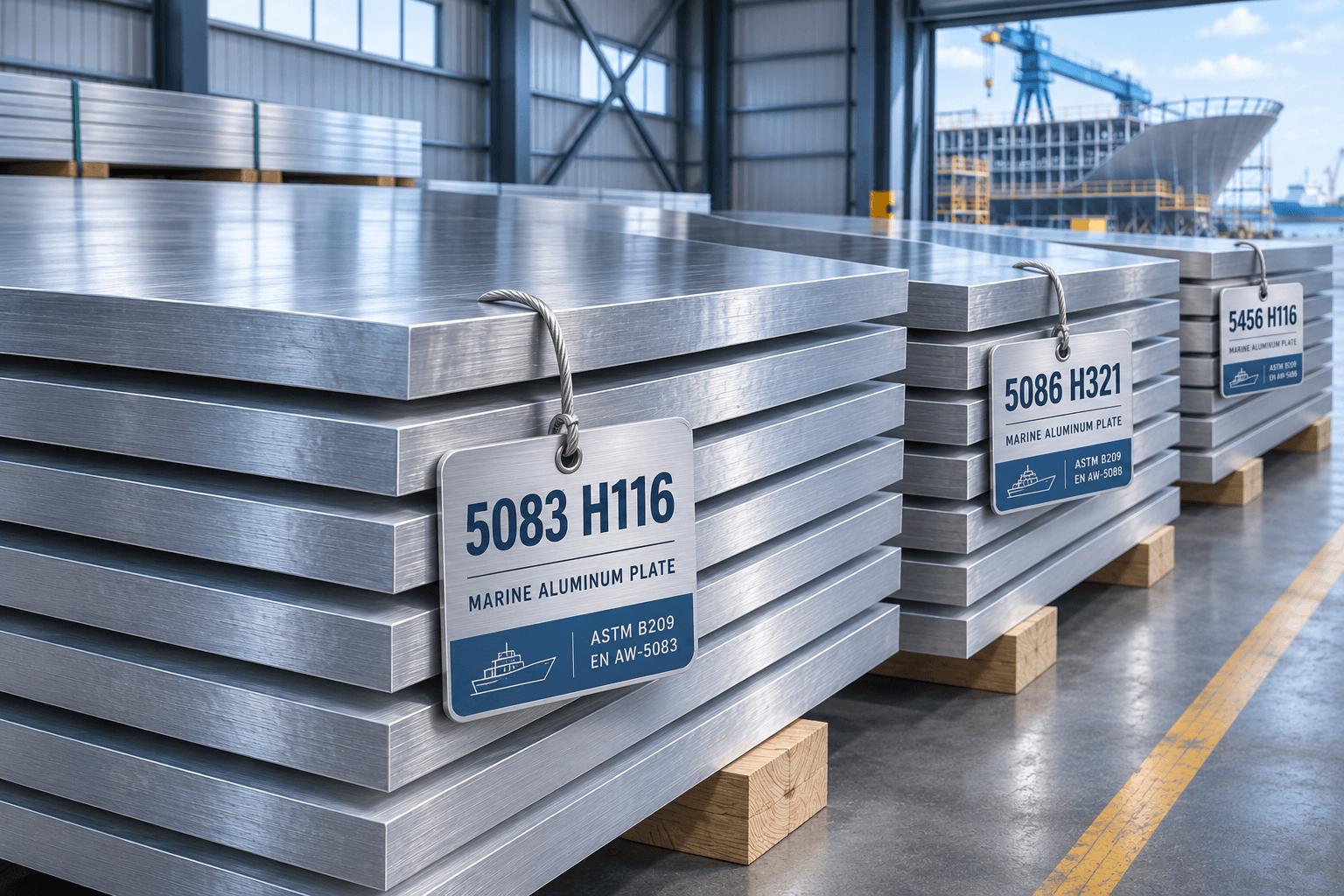
Not all these alloys automatically qualify under ASTM B928. The specific alloy and temper must appear in the applicable standard tables and meet the relevant requirements.
2.3 Understanding H116 and H321 Tempers
H116 and H321 are important tempers for certain 5xxx-series marine aluminum products.
H116: A special strain-hardened temper used for specified high-magnesium aluminum products intended for marine environments. Its requirements address mechanical properties and corrosion resistance.
H321: A strain-hardened and stabilized temper used for specified marine aluminum products. It provides controlled mechanical properties and corrosion performance under the applicable specification.
For marine plate buyers, the alloy designation alone is not sufficient. A purchase order should clearly identify both the alloy and temper, such as 5083-H116 or 5083-H321, when those conditions are required by the project.
3. ASTM B928 vs ASTM B209: Key Technical Differences
3.1 Product Scope and Intended Service
ASTM B209 covers a broad range of aluminum sheet, coiled sheet, and plate products for general industrial applications.
ASTM B928 focuses on specified high-magnesium aluminum products for marine service. Its requirements are particularly relevant when materials are used in hull construction or applications involving frequent or constant direct seawater contact.
This means that the standards should not be selected simply by comparing their names. Buyers must consider the intended service environment and the exact material condition.
3.2 Corrosion Resistance Requirements
One of the most important differences is the additional corrosion resistance verification specified by ASTM B928 for applicable alloy-tempers.
High-magnesium aluminum alloys can develop sensitized microstructures under certain thermal exposure conditions. This may increase susceptibility to intergranular corrosion, exfoliation corrosion, and stress corrosion cracking.
ASTM B928 addresses these risks through specified corrosion testing and microstructural evaluation requirements.
ASTM B209 does not impose the same additional B928 corrosion testing requirements on its general product scope.
3.3 Mechanical Properties
Both standards establish mechanical property requirements for the applicable alloys, tempers, and product thicknesses.
Typical mechanical properties evaluated during aluminum plate inspection include:
- Tensile strength.
- Yield strength.
- Elongation.
- Applicable dimensional tolerances.
- Other requirements specified in the purchase contract.
Mechanical property values depend on alloy, temper, thickness, and test direction. Buyers should always compare material test results against the correct specification table rather than using generic online values.
3.4 Quality Inspection and Traceability
Material traceability is especially important for marine structural applications.
Buyers should establish a clear connection between the delivered aluminum plate, its alloy and temper, the production lot, and the corresponding inspection documentation.
For ASTM B928 products, inspection and testing requirements must be evaluated according to the applicable production lot definitions and standard provisions. Proper identification helps buyers verify that supplied material corresponds to the relevant test records.
4. Corrosion Testing: ASTM G66 and ASTM G67
For applicable marine aluminum products, corrosion testing is one of the most important parts of the ASTM B928 quality control process.
Two important test methods are ASTM G66 and ASTM G67. They evaluate different forms of corrosion susceptibility and should not be treated as interchangeable tests.
4.1 ASTM G66: ASSET Exfoliation Corrosion Test
ASTM G66 is the Standard Test Method for Visual Assessment of Exfoliation Corrosion Susceptibility of 5XXX Series Aluminum Alloys, also known as the ASSET Test.
The test evaluates the susceptibility of applicable aluminum products to exfoliation corrosion under a specified exposure procedure.
Exfoliation corrosion can develop along grain boundaries and produce a layered or lifted appearance as corrosion progresses through the material.
For marine aluminum plate inspection, ASTM G66 provides an important indication of the material’s resistance to exfoliation corrosion.
4.2 ASTM G67: NAMLT Intergranular Corrosion Test
ASTM G67 is the Standard Test Method for Determining the Susceptibility to Intergranular Corrosion of 5XXX Series Aluminum Alloys by Mass Loss After Exposure to Nitric Acid.
It is commonly known as the NAMLT Test.
The method evaluates intergranular corrosion susceptibility by measuring material mass loss after exposure to a specified nitric acid environment.
Excessive grain-boundary precipitation in certain high-magnesium aluminum alloys can increase their susceptibility to intergranular corrosion. ASTM G67 helps evaluate this metallurgical risk.
4.3 Why Are Both G66 and G67 Important?
ASTM B928 addresses different corrosion characteristics through applicable test methods and acceptance requirements. Passing one corrosion test does not automatically demonstrate compliance with another.
The applicable test requirements, acceptance criteria, qualification procedures, and production lot testing frequency should be confirmed against the relevant edition of ASTM B928 and the purchase contract.
When purchasing 5083-H116 or 5086-H116 marine aluminum plate, do not simply ask the supplier whether the product has passed a corrosion test. Specify the required test methods and request the corresponding records.

5. How to Choose Between ASTM B928 and ASTM B209
The correct specification depends on the actual operating environment and engineering requirements.
5.1 Marine Hull Construction
For aluminum plates used in vessel hulls and other structural areas with frequent or constant direct seawater contact, ASTM B928 should be carefully evaluated when the specified alloy and temper fall within its scope.
Commonly considered materials include specified 5083 and 5086 marine alloy-tempers.
Buyers should confirm the applicable corrosion testing requirements, mechanical properties, thickness range, and project approval requirements before purchasing.
5.2 Yacht and Passenger Vessel Construction
Yacht and passenger vessel projects may use aluminum in hulls, decks, superstructures, partitions, and other structural components.
The material specification should be selected according to the component’s structural function, exposure to seawater, welding requirements, and engineering design.
Some components may require B928-compliant material, while other components may be adequately specified under a suitable B209 alloy-temper combination.
5.3 Marine Equipment and Interior Components
Not every aluminum component installed on a vessel is directly exposed to seawater.
Interior panels, equipment enclosures, decorative parts, and certain fabricated components may use other aluminum alloy-tempers when permitted by the project design.
ASTM B209 may be appropriate for these applications if the selected material meets the required mechanical, corrosion, fabrication, and service conditions.
5.4 General Industrial Aluminum Applications
For construction, transportation, machinery, industrial fabrication, and general aluminum processing, ASTM B209 is commonly used for applicable sheet and plate products.
In these applications, buyers should focus on alloy, temper, thickness, dimensional tolerances, surface finish, and required inspection documents.

6. What Documents Should Buyers Request?
Purchasing marine aluminum plate requires more than checking the alloy name printed on the packaging.
A complete inspection document package helps buyers confirm product conformity and maintain traceability throughout the supply chain.
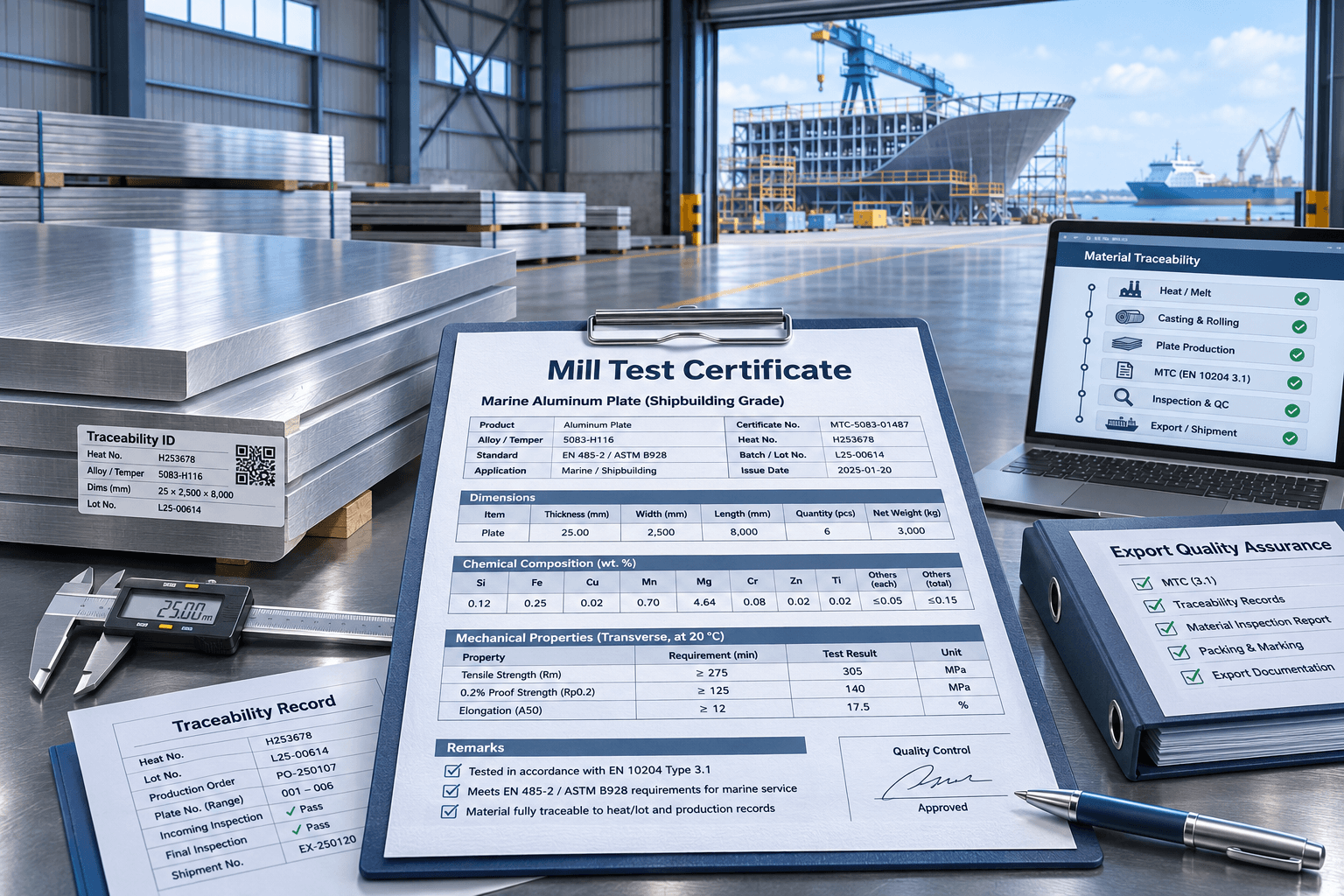
6.1 Mill Test Certificate
A Mill Test Certificate (MTC) or Mill Test Report (MTR) should provide the relevant material information, including:
- Manufacturer or producer identification.
- Applicable ASTM specification and edition.
- Aluminum alloy and temper designation.
- Heat number or cast number and production lot identification, as applicable.
- Chemical composition test results.
- Mechanical property test results.
- Product thickness and dimensions.
- Applicable corrosion test results when required.
For marine projects, buyers should confirm that the documents identify the exact material supplied and can be traced to the corresponding production lot.
6.2 Corrosion Test Reports
When ASTM B928 compliance requires corrosion verification, buyers should request the relevant ASTM G66 and ASTM G67 test records according to the agreed inspection and lot release requirements.
These reports should identify the tested alloy, temper, production lot, test method, and test results.
6.3 Third-Party Inspection
For large orders or critical marine engineering projects, buyers may arrange independent inspection before shipment.
The inspection scope can include:
- Material identification and traceability.
- Thickness, width, length, and dimensional tolerances.
- Surface quality and visual inspection.
- Review of chemical and mechanical test reports.
- Verification of specified corrosion test documentation.
- Packaging, marking, and shipment condition.
For thickness inspection, buyers can specify the measurement method, inspection locations, and dimensional tolerances according to the applicable product standard and purchase agreement.

If the project requires classification society approval, such as ABS, DNV, CCS, LR, or BV, the buyer should separately confirm the applicable approval scope and product documentation. Compliance with an ASTM material specification does not automatically mean that a product has received classification society approval.
7. Marine Aluminum Plate Purchasing Checklist
Before requesting a quotation, buyers should prepare a clear technical specification. The following checklist can help reduce misunderstandings between buyers, suppliers, and project engineers.
| Purchasing Item | Information to Confirm |
|---|---|
| Тип продукта | Aluminum sheet or aluminum plate |
| Сплав | 5083, 5086 or another approved grade |
| Характер | H116, H321 or the specified condition |
| Стандартный | ASTM B928/B928M or ASTM B209/B209M |
| Толщина | Required thickness in mm or inches |
| Width and Length | Required plate dimensions and tolerances |
| Поверхностная отделка | Mill finish or another agreed finish |
| Механические свойства | Tensile strength, yield strength and elongation |
| Corrosion Testing | ASTM G66 and ASTM G67 where applicable |
| Сертификация | MTC, MTR and required test reports |
| Осмотр | In-house or third-party inspection requirements |
| Количество | Number of plates or total weight |
| Упаковка | Export packaging and transportation requirements |
A detailed purchasing specification allows suppliers to provide more accurate quotations and helps prevent disputes regarding material grades, temper, testing, and certification.
8. Frequently Asked Questions About ASTM B928 and ASTM B209
Q1. What Is the Main Difference Between ASTM B928 and ASTM B209?
ASTM B209 is a general specification for aluminum and aluminum-alloy sheet and plate. ASTM B928 is designed for specified high-magnesium aluminum-alloy products used in marine service and similar environments. B928 includes additional corrosion resistance requirements for applicable products.
Q2. Is ASTM B928 Better Than ASTM B209?
Neither standard is universally better. ASTM B928 is more specific to certain marine applications involving frequent or constant seawater contact, while ASTM B209 covers a wider range of aluminum sheet and plate products. The correct standard depends on the application and engineering requirements.
Q3. Does All 5083 Aluminum Plate Need to Meet ASTM B928?
No. The required specification depends on the alloy temper, product condition, and intended application. ASTM B209 contains specific provisions referring certain 5xxx-series H116 and H321 products with 3% or more nominal magnesium to B928 when intended for marine service. Buyers should confirm the exact requirements in their purchase contract.
Q4. What Is the Difference Between 5083-H116 and 5083-H321?
Both are important marine aluminum tempers with specific mechanical and corrosion performance requirements. Their processing conditions and applicable material properties are defined by the relevant standards. Buyers should select the temper according to engineering drawings, structural requirements, and the applicable specification.
Q5. What Are ASTM G66 and ASTM G67 Tests?
ASTM G66 is the ASSET test used to evaluate exfoliation corrosion susceptibility in applicable 5xxx-series aluminum alloys. ASTM G67 is the NAMLT test used to evaluate intergranular corrosion susceptibility through mass loss. They assess different corrosion characteristics and are not interchangeable.
Q6. Can 5052 Aluminum Plate Be Used in Marine Applications?
Yes. 5052 aluminum offers good formability and corrosion resistance and may be suitable for certain marine equipment, panels, and non-hull components. However, 5052 does not automatically fall within the high-magnesium product scope of ASTM B928. Its suitability must be determined by the engineering design and applicable material specification.
Q7. Is an MTC Sufficient for Marine Aluminum Plate?
An MTC is an important part of material traceability, but it may not be sufficient for every marine project. Depending on the purchase contract, buyers may also need corrosion test reports, inspection records, third-party verification, and applicable classification society documentation.
Q8. What Information Should I Provide When Requesting a Marine Aluminum Plate Quotation?
Provide the aluminum alloy, temper, applicable ASTM standard, thickness, width, length, quantity, surface finish, required test reports, and any project-specific certification requirements. Technical drawings or material specifications can also help suppliers evaluate your requirements more accurately.
9. Conclusion: Choose the Right Aluminum Standard for Your Project
Understanding ASTM B928 vs ASTM B209 is essential when sourcing aluminum sheet and plate for shipbuilding, yacht construction, marine equipment, and industrial applications.
ASTM B209 provides a general material specification for aluminum sheet and plate, while ASTM B928 addresses specified high-magnesium aluminum products for demanding marine environments and includes additional corrosion resistance requirements.
For marine structural applications, selecting the correct alloy and temper is only the first step. Buyers should also verify the applicable material standard, corrosion testing requirements, mechanical properties, inspection documentation, and project approval conditions.
A well-prepared purchasing specification helps improve material traceability, reduce technical misunderstandings, and support reliable project execution.
Request a Marine Aluminum Plate Quotation from Gengfei Steel
Henan Gengfei Industrial Co., Ltd. supplies aluminum and steel products for international buyers, distributors, fabricators, and industrial projects.
If you are sourcing marine aluminum plate or aluminum sheet, send us your required alloy, temper, dimensions, quantity, and technical standard. Our team can review your material requirements and discuss a suitable supply solution.
- Marine aluminum plate and aluminum sheet sourcing.
- Available alloy and temper options subject to confirmation.
- Custom dimensions and processing requirements.
- Material documentation and inspection requirements.
- Export packaging and shipment coordination.
Send us your inquiry today to discuss your marine aluminum plate requirements.
Contact Gengfei Steel for a Quote
Технические ссылки
- ASTM B928/B928M: High Magnesium Aluminum-Alloy Products for Marine Service and Similar Environments
- ASTM B209/B209M: Aluminum and Aluminum-Alloy Sheet and Plate
- ASTM G66: ASSET Exfoliation Corrosion Test
- ASTM G67: NAMLT Intergranular Corrosion Test
Note: This article is intended as general technical and purchasing guidance. Always verify the latest applicable standard, product tables, engineering drawings, and project specifications before placing an order.
